An office move is judged by one moment: 8:30am Monday, when everyone sits down and either works or doesn't. We run the physical side of IT relocations so that moment is boring — the new site cabled early, every connection documented before shutdown, the rack moved insured, and every service verified live before anyone's coffee goes cold.
Prefer to talk? Call Chris — 0412 853 618
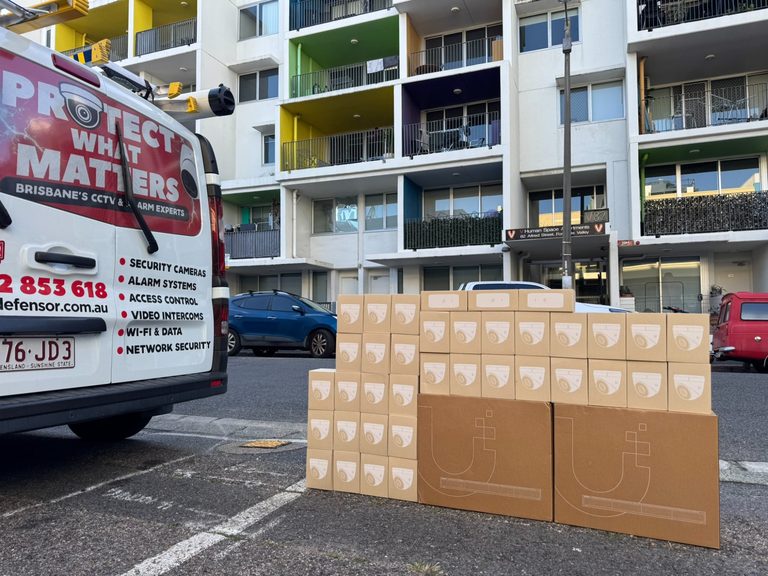
Tell us both addresses and the move date — Chris will come back with straight advice and a fixed price for the whole physical side. Prefer to talk? Call 0412 853 618. The earlier we're in the plan, the cheaper the it relocation gets — six weeks out is ideal, and even four saves real money over two.
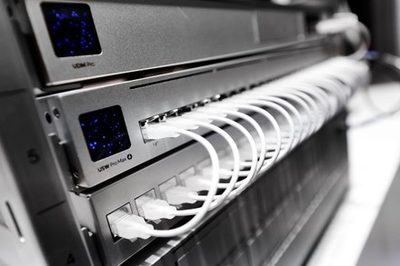
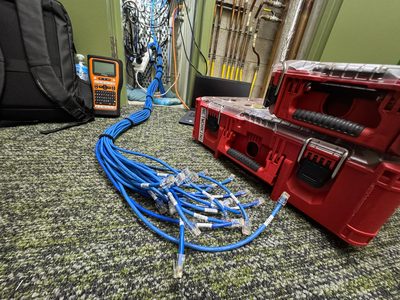
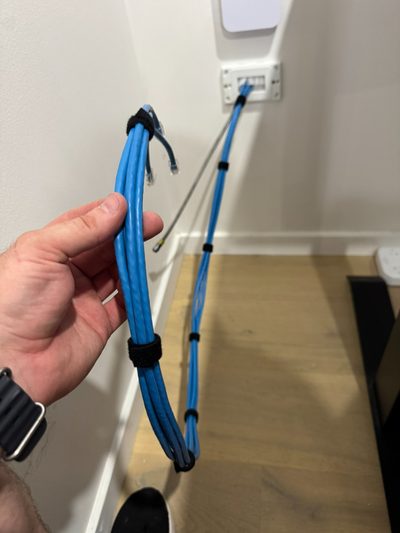
Office moves fail in predictable, preventable ways: the new site's cabling "was supposed to be done", the internet cutover got ordered three weeks too late, the rack arrived but the one cable nobody documented didn't, and Monday became a week. Every one of those failures is a planning artefact — which means every one of them is optional.
Unified Network Solutions runs the physical side of IT relocation across Brisbane and South East Queensland: the new premises cabled and connected before the move, servers and racks documented, transported, and rebuilt, desks patched and verified, and the old site decommissioned to lease make-good standard. We work alongside your IT provider (their config, our copper) or carry the physical layer entirely for businesses without one. ACMA Open Cabler #42489, insured end to end, and a runsheet that treats Monday 8:30am as the only deadline that matters. The same discipline scales up to data centre relocation: stage, move, verify, and a data centre relocation rehearsal before the real night. A data centre relocation rewards the planner, not the brave.
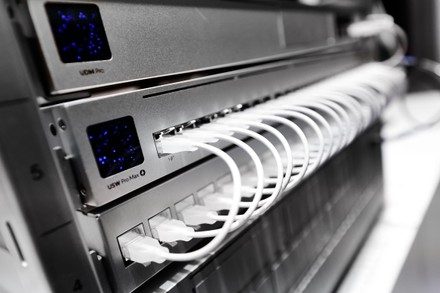
Treat the rack as cargo and the move fails; treat it as a running system temporarily inconvenienced and the move works. The rack is the move's beating heart: everything else can arrive late, but if the rack isn't rebuilt and running, nothing works anywhere. So it gets the full treatment — every connection photographed, mapped, and labelled before the first plug is pulled; equipment de-racked in order, transported padded and insured; and rebuilt at the new site to the same elevation, re-cabled to the documented map.
A full server relocation or data centre relocation follows the same discipline at higher stakes: backups verified before shutdown (with your IT provider — their domain, our insistence), transport scheduled for the shortest possible dark window, and the critical services proven back online before anything else moves. The undocumented cable is the natural predator of office moves; documentation-first is how we've kept it extinct on ours.
Smaller comms cabinets ride the same process in miniature — see rack relocations for the single-cabinet version.
Every it relocation has the same skeleton; the flesh varies by what's moving and how far. The common shapes across Brisbane:
Ten to forty desks, one rack, twenty minutes apart. The classic Friday-to-Monday weekend move — new site cabled in advance, rack moved Saturday morning, desks Sunday, nothing to report Monday.
CBD to CBD with loading dock bookings, lift schedules, and building inductions on both ends. The logistics get formal; the method stays identical — and we've danced with most of Brisbane's building managers before.
A server relocation or small data centre relocation with real uptime stakes — backups verified, the shortest possible dark window scheduled, critical services proven first. Their config, our transport and copper.
Operations that can't go dark for a weekend move in waves — departments relocating while both sites run in parallel, the network bridged for the overlap, and the old site shrinking by stages.
Moving because you've grown — which makes the new site a design opportunity, not just a destination. The relocation pairs with a network design so the new office starts ahead of the old one.
A team, a floor, or a function relocating while the rest stays — desk relocation cabling at the new end, the network re-segmented across two sites, and both halves documented so neither becomes the mystery site later.
The physical side of a smooth move, in the order it should happen. Tape this to the move planning whiteboard.
Weeks 6–4: the new site audit. Existing cabling tested for reuse, the comms room assessed, the data point plan drawn from your floor plan — and the internet service ordered NOW, because carrier lead times don't care about your settlement date.
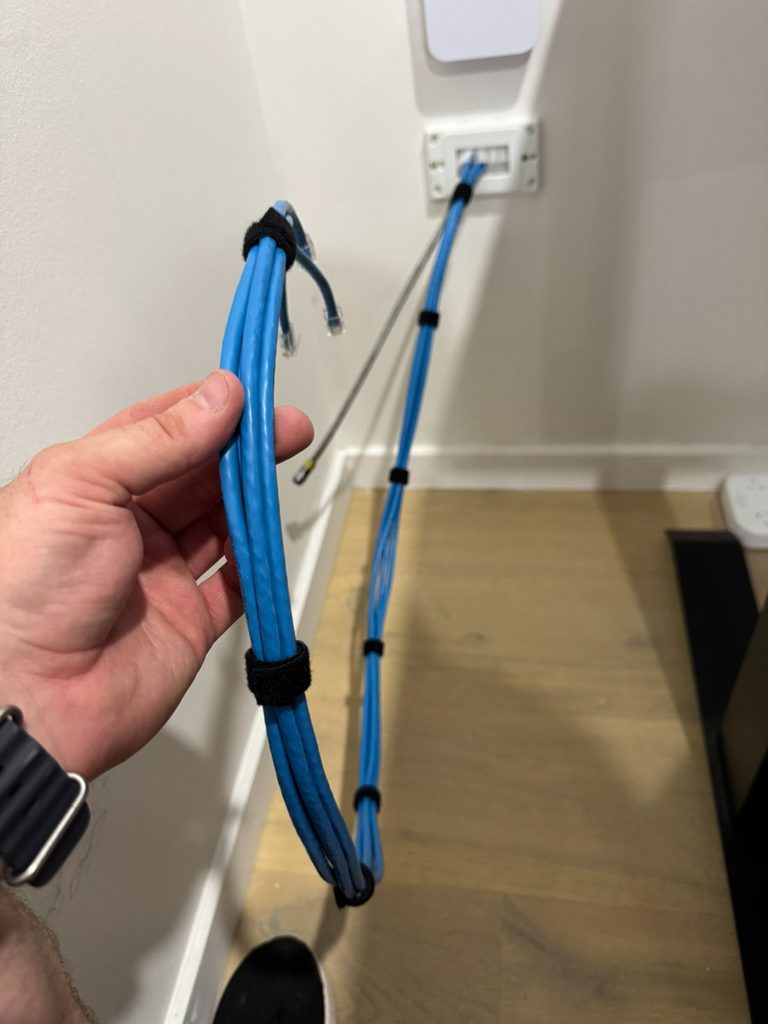
Weeks 4–1: build the landing zone. New runs installed and certified, the cabinet built, NBN coordinated, WiFi up — the new site finishes ready for traffic before a single box is packed. Desk positions patched and tested against the seating plan.
Move weekend: relocate, don't renovate. Friday: document and shut down. Saturday: rack and equipment move, rebuild, prove the core. Sunday: desks, peripherals, and the verification pass against the pre-move service list. Monday: nothing to report — which was the whole plan.
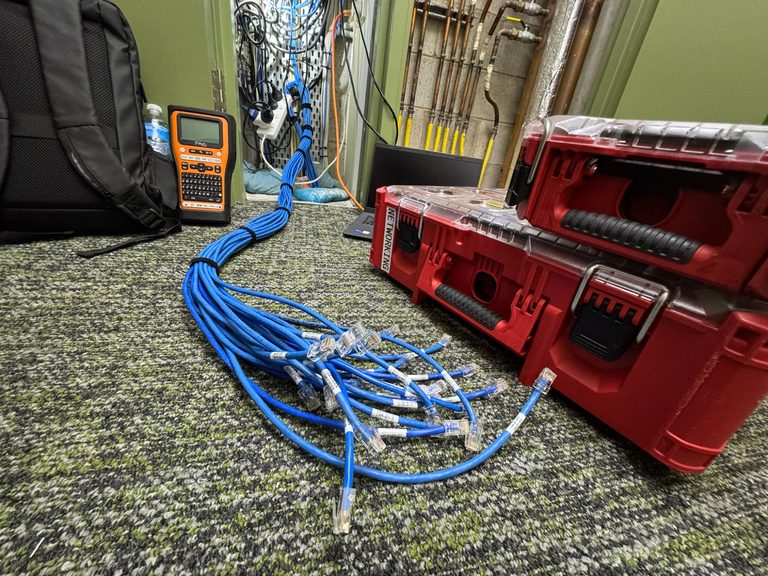
The single biggest predictor of a smooth relocation is how finished the new site was on the Friday. So the weeks before the move are where we earn the fee: a site audit of the new premises (what cabling is reusable, what the comms room can hold, what the lease actually includes), then the build — data points where the seating plan needs them, the cabinet sized for the gear that's coming, NBN works coordinated against carrier lead times, and WiFi designed rather than inherited.
Done this way, with the landing zone finished early, move weekend is purely logistics — and the new office's network is better than the old one's from its first morning, because for once it was built deliberately, with the lessons of the last tenancy priced in.
For fitouts happening before the move-in, this dovetails with fitout cabling — same team, same program, one less seam for things to fall through.
Every commercial lease ends twice — once when you move out, and once when the landlord inspects. The lease's make-good clause has opinions about how you leave, and the comms infrastructure is part of them. We close out the old site to the standard the agreement demands: equipment decommissioned and removed, cabling stripped back or left in place per the lease (they vary — we read it), wall plates and penetrations made good, and the comms room handed back in a state that doesn't invite a bond dispute.
Everything is photographed at completion — the evidence pack that turns the exit inspection into a formality. Old hardware is disposed of as e-waste or returned to your IT provider's asset process, and anything with data implications is handled under their direction (drives travel with you or them, never with the rubbish).
It's the unglamorous bookend of the move — and skipping it is how businesses donate their bond to former landlords. Ten percent of the project budget for a hundred percent fewer arguments — make-good is the cheapest insurance in the whole move.
Old site documented, new site audited, the gap between them priced — and the internet order placed before anything else, because lead times rule moves.
Cabling, cabinet, connectivity, and WiFi finished and tested in the weeks before — the landing zone ready before a single box moves.
Documented shutdown, insured transport, identical rebuild, staged verification — the runsheet shared with your IT provider so both halves land together.
Every service checked against the pre-move list before Monday, then the old site made good with photographic evidence for the bond.
Because the move's hardest problems are physical-layer problems, and that's the layer we own.
New-site cabling, the move itself, and the old-site make-good from one accountable contractor — ACMA #42489 — instead of three vendors pointing at each other on move weekend.
Nothing powers down before it's mapped, labelled, and photographed — the discipline that makes "where did this cable go" a question nobody has to ask.
We slot into your MSP's runsheet or run the physical layer solo — and white-label the whole service for IT companies managing client moves.
A small office IT relocation — rack documented and moved, equipment reinstalled, services verified at the new site — typically runs $1,500–$4,000 depending on equipment and distance, with the new site's cabling readiness quoted separately if needed. Larger moves and staged relocations are quoted from a site walk of both ends. Fixed price, no hourly surprises mid-move. Call Chris on 0412 853 618.
Removalists move boxes; we move working systems. The IT relocation includes documenting every connection before shutdown, transporting equipment insured and padded, reinstalling to the documented state, re-cabling at the new site, and verifying every service live before Monday. Removalists are great at desks — your server rack deserves people who know what's in it, what order it shuts down in, and what it costs per hour to be wrong.
Sequence and verification. The new site's cabling and comms room are ready and tested before the move weekend; everything is documented and labelled before powering down at the old site; the critical path (rack, network, internet) moves and proves out first; then desks follow. Sunday afternoon is verification — every service checked against the pre-move list — so Monday's only surprise is how unremarkable it is.
That's the ideal sequence, and we push every client toward it. New-site works — data points, comms cabinet, NBN coordination, WiFi — happen in the weeks before the move, certified and tested, so the move weekend is relocation only, not construction. The single biggest predictor of a smooth Monday is how finished the new site was on Friday.
Yes. Lease make-good on the comms side: equipment decommissioned and removed, cabling stripped or left per your lease's requirements, wall plates and penetrations made good, and the comms room left as the agreement demands. We document the end state with photos so the bond conversation has evidence. E-waste and old hardware disposed of properly along the way.
Near enough — that's the point of weekend and staged moves. The classic pattern is Friday-close-to-Monday-open with zero trading hours lost; for operations that can't take a weekend gap, staged relocations move departments in waves while both sites run in parallel. Internet cutover is the only genuinely tricky timing, which is why ISP coordination starts weeks early.
Closely — it's their config and our copper. The usual split: we handle the physical relocation, cabling, and power; they handle servers, backups, and cloud cutovers; and the runsheet is shared so nothing falls between. For businesses without an IT provider, we cover the physical side completely and verify connectivity end to end — and white-label for MSPs running their client's move.
We service Brisbane CBD, North Brisbane, South Brisbane, Gold Coast, Sunshine Coast, Ipswich, Logan, Moreton Bay, Redlands, and the wider South East Queensland region. For larger projects, we can service regional Queensland by arrangement.
Office IT relocations, server moves, and move cabling across Brisbane CBD and metro, Logan, Ipswich, Redlands, Moreton Bay, the Gold Coast, and the Sunshine Coast — single-cabinet offices hopping suburbs, multi-floor businesses changing towers, and staged moves that can't afford a dark weekend. Both ends of the move handled by one team, fixed-price, with Monday morning as the contract. The it relocation services that matter are the ones planned weeks before the truck — and that's exactly where we start. From office moves to full data centre relocation projects — every data centre relocation sequenced so the business never notices the move.
Both addresses, the date, and rough headcount — that's enough for a fixed quote covering the new site's readiness, the move itself, and the make-good behind you.
Call 0412 853 618 Get a Move Quote Online Unified Network Solutions