Every business network lives in a box on a wall somewhere — and the difference between a good one and a bad one shows up every time something needs fixing. We supply, mount, and cable data cabinets for Brisbane offices, shops, and clinics: sized right, located sensibly, terminated and labelled by a registered cabler.
Prefer to talk? Call Chris — 0412 853 618
New cabinet, an upgrade, or a relocation — send through your details (a photo of the current setup helps) and Chris will get back to you with straight advice and a fixed price. Prefer to talk? Call 0412 853 618.
For most Brisbane businesses, the comms cabinet is the entire network: the building's cabling lands there, the internet arrives there, the switch and WiFi controller live there, and when anything digital breaks, somebody opens that door first. A cabinet installed properly — sized for the gear, placed for ventilation and access, cabled and labelled to standard — makes everything downstream of it cheaper and calmer for a decade.
Unified Network Solutions installs data cabinets across Brisbane and South East Queensland: supply and mounting (wall or floor), building runs terminated into patch panels and certified, equipment installed and dressed, and the whole thing documented. We also fix the other kind — cabinets that are full, cooking, or in the wrong place entirely — through upgrades and relocations that rescue the network without rebuilding it. ACMA Open Cabler #42489, fixed prices, and quotes from photos for most jobs.
Data cabinet installation starts with one decision that's expensive to reverse, so it gets made carefully. The wall-mount comms cabinet is the right answer for most offices, shops, and clinics: 6 to 18RU of lockable, ventilated space holding a patch panel, switch, NBN gear, and a small UPS, up off the floor and out of harm's way. The decision points are weight (the wall must genuinely carry the loaded cabinet — we check, not hope), depth for the gear going in, and enough spare RU that year three doesn't require cabinet two.
Floor-standing cabinets earn their footprint when the equipment list grows — an NVR with serious storage, bigger UPS units, or the first server. More capacity, both-sides service access, and better airflow management; the trade is floor space and cost.
The honest dividing line is the equipment list plus three years of growth. We size from that list — and when a client's picturing the wrong cabinet, we say so before it's bought, not after it's full. For genuinely server-grade needs, step up to server rack installation.
The same anatomy serves a five-person office or a busy shopfront — scaled to fit.
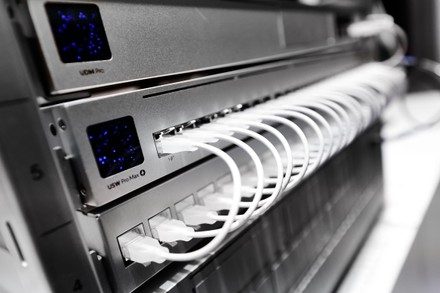
Every building run terminated into a patch panel and certified — never raw cables plugged straight into the switch, which is how cabinets become unmaintainable.
A switch sized for the ports and the PoE load — phones, APs, and cameras all draw power, and the budget gets checked across every port, not assumed.
The carrier service brought into the cabinet cleanly, the router mounted and powered properly — not balanced on top with a wall-wart dangling.
A compact UPS rides out the brownouts and blips that otherwise reboot the network daily in some Brisbane buildings — cheap insurance for POS and phones.
Queensland heat is the number-one cabinet killer. Fan kits, vented doors, and placement away from sun and sealed cupboards — designed in, not retrofitted after the first dead switch.
Every port labelled, every lead at length, and a port map handed over — the standard finish on everything we build, because the next technician might not be us.
Plenty of data cabinet work isn't new installs — it's rescuing cabinets that have outgrown their size, their spot, or their decade.
The full cabinet. Before buying bigger, we rationalise: abandoned gear out, dead cabling stripped, leads replaced at correct lengths. A third of most "full" cabinets is junk — and when an upgrade genuinely is needed, everything re-terminates across to the new cabinet in a planned, low-downtime sequence.
The wrong location. Sealed cupboards, afternoon sun, above the doorway, behind the stock shelves — bad placement taxes every service visit and cooks the gear between them. Relocations re-route and re-certify the cabling to a better spot, usually in an evening.
The inherited mystery. New tenancy, old cabinet, no documentation. We trace, test, label, and document what's there — then upgrade only what the evidence says needs it. Diagnosis before spend, always.
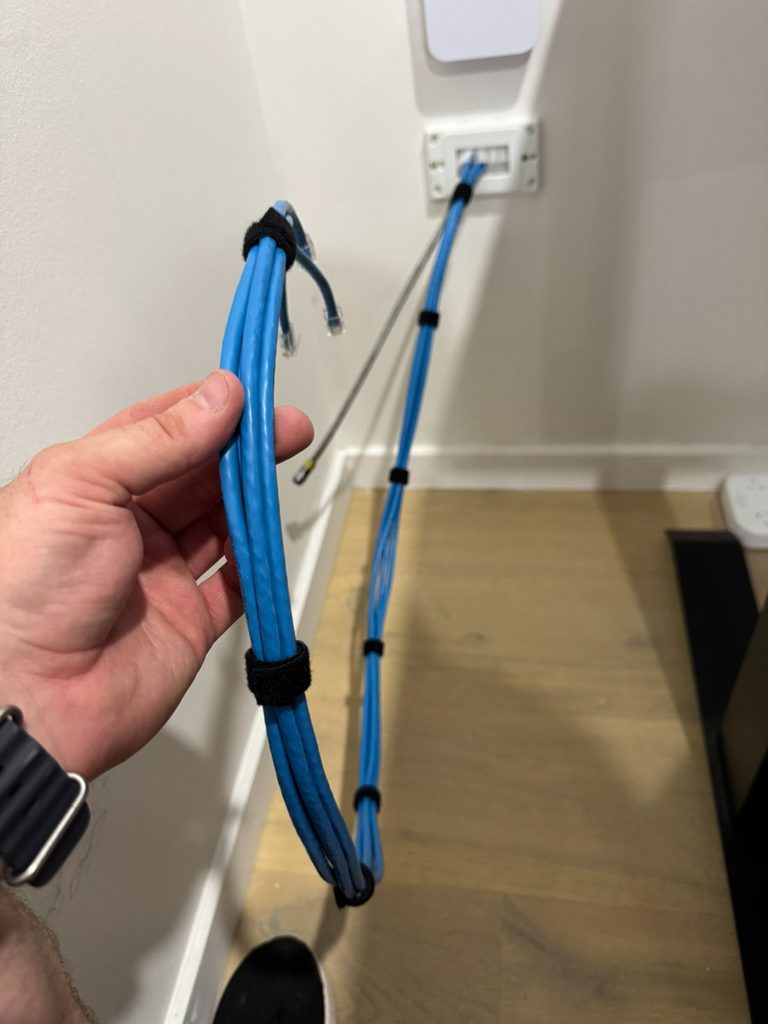
The most cabinet-dependent businesses in Brisbane aren't offices at all. Shopfronts and clinics run their whole trading day through one small cabinet — POS and EFTPOS, the booking system, guest WiFi, security cameras, music, phones. When that cabinet is a milk crate of power boards behind the stock room door (we've seen it), every fault at Saturday peak is a crisis with an audience.
We build retail comms cabinets for the reality: compact and lockable, ventilated for back-of-house heat, every service labelled so a register drop-out is a sixty-second patch-lead check by whoever's on shift, and the NBN gear secured where a delivery pallet can't unplug Christmas trading. Clinics get the same treatment with quieter requirements — practice management uptime and a cabinet that doesn't hum through a consult wall.
For multi-site groups, the same cabinet standard rolls out across every location — one layout, one labelling convention, one phone call when anything anywhere misbehaves.
One topic deserves its own section, because it kills more Brisbane network equipment than every other cause combined: heat. A comms cabinet in a sealed cupboard, a west-facing wall, or an unventilated back room spends every summer afternoon cooking its own switch. The gear doesn't fail dramatically — it throttles, drops packets, reboots on the worst days, and dies years early. The fixes are unglamorous and absolute: ventilated placement chosen at install time, fan kits and vented doors where the room can't help, heat-producing gear spaced rather than stacked, and the cabinet positioned out of direct sun. Every data cabinet installation we quote includes a thermal sanity check of the location — and if the spot you've allocated is an oven, we'll say so and propose the alternative before anything is mounted. It's a five-minute conversation at install time that buys years of equipment life.
A photo of the space (and the current setup, if any) plus your equipment list gets you an accurate fixed price — site visits for the genuinely tricky ones.
Cabinet supplied at trade pricing or yours installed — mounted to structure that carries the loaded weight, positioned for ventilation and access.
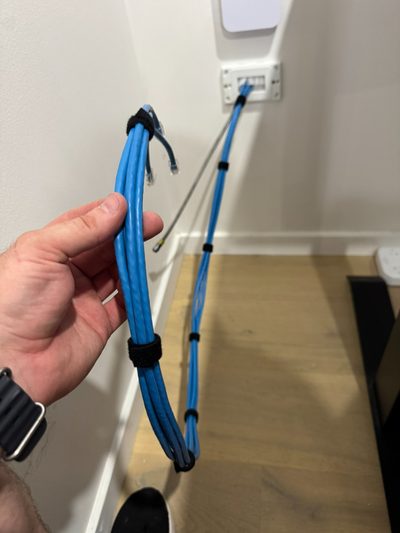
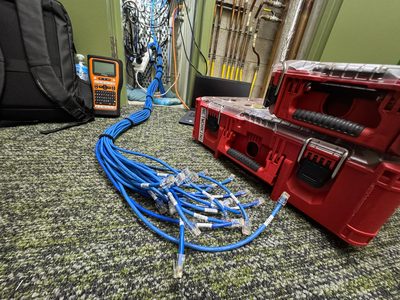
Building runs into the patch panel, certified; equipment installed, patched at length, powered through the UPS; everything labelled as it lands.
Services verified live, photos taken, port map delivered — a cabinet any competent technician can service without phoning a historian.
A cabinet is a cabling job wearing a hardware job's clothes — and we're cablers first.
ACMA Open Cabler #42489 — terminations, certification, and AS/CA S009 compliance are in-house, so the cabinet is legal as well as tidy.
We sell the cabinet the equipment list needs, not the biggest one on the truck — and we'll talk you out of the wrong purchase for free.
White-label cabinet builds and upgrades for IT companies — your client, our field work, documentation in your format.
A standard wall-mount comms cabinet — supplied, mounted, with the building cabling terminated into a patch panel and the network gear installed and dressed — typically runs $900–$2,200 plus hardware depending on cabinet size and cable count. Cabinet swaps and upgrades are similar once the re-termination work is counted. Fixed price from photos in most cases — call Chris on 0412 853 618.
Mostly size and purpose. A data cabinet (or comms cabinet) is the compact wall- or floor-mounted enclosure most businesses need — housing patch panels, a switch, NBN equipment, maybe an NVR and small UPS. A server rack is the bigger floor-standing version for sites running servers and serious compute. The discipline is identical; the scale differs. If you're not sure which you need, the equipment list answers it.
Three, in rising order of cost: rationalise what's there (abandoned gear and dead cabling often free up real space), extend with a second cabinet linked properly, or upgrade to a larger cabinet with everything re-terminated across. The right answer depends on what's actually consuming the space — which a quick look (or photo) tells us. Full cabinets are usually one-third junk.
Central to the cable runs it serves (every metre saved repeats across every run), ventilated or ventilatable, away from water and direct sun, lockable or in a controlled space, and with working room in front. The classic mistakes — above a doorway in direct afternoon sun, sealed in an airless cupboard, or behind the storeroom shelving — all show up as service costs later. We advise on placement as part of every quote.
Yes. Cabinet relocations are routine: cabling re-routed or extended to the new position, runs re-terminated and re-certified, equipment moved across in a planned sequence with minimal downtime — usually an evening for a small cabinet. Renovations, tenancy changes, and that-cupboard-was-always-wrong are the usual triggers.
Constantly. Retail comms cabinets carry the whole trading day — POS, EFTPOS, guest WiFi, cameras, music — usually from a back-of-house corner that collects boxes. We install compact lockable cabinets with the cabling terminated properly, gear secured and ventilated, and everything labelled so a register fault at Saturday peak is a sixty-second patch-lead check, not an archaeology dig.
Yes — that's the substance of the job. Building runs get terminated into the cabinet's patch panel and certified, the NBN/ISP service is brought in cleanly, equipment is patched with leads at correct lengths, and everything is labelled and documented. As ACMA Open Cablers (#42489), the cabling is done in-house, legally, and to AS/CA S009.
We service Brisbane CBD, North Brisbane, South Brisbane, Gold Coast, Sunshine Coast, Ipswich, Logan, Moreton Bay, Redlands, and the wider South East Queensland region. For larger projects, we can service regional Queensland by arrangement.
Mostly, yes. Mounting and cabling the new cabinet happens alongside your existing setup with no interruption; the cutover — moving services from old to new — is the only disruptive window, and it's typically under an hour for a small cabinet, scheduled before opening, after close, or in your quietest hour. We agree the window in advance so nobody discovers the internet missing mid-invoice.
Quality commercial brands at trade pricing, matched to the job rather than a quota — the cabinet itself is commodity steel; what matters is correct sizing, mounting, and the workmanship inside it. If you have a brand preference or an existing standard across sites, we'll match it. And if you've already bought a cabinet, we'll install that instead, with honest feedback first if it won't suit.
Comms cabinet and data cabinet installation across Brisbane CBD and metro, Logan, Ipswich, Redlands, Moreton Bay, the Gold Coast, and the Sunshine Coast — offices, shopfronts, clinics, and multi-site groups standardising their back-of-house. New installs, upgrades for cabinets that ran out of room, and relocations for the ones that were never in the right place. Fixed prices, quotes from photos, and the documentation included as standard.
Send a photo of the space — or the chaos you've inherited — and we'll quote a fixed price to build, upgrade, or relocate it properly. Sized honestly, cabled legally, labelled completely.
Call 0412 853 618 Get a Quote Online Unified Network Solutions