Your patch panel is the heart of the comms cabinet. We install and terminate Cat6, Cat6A and fibre patch panels for Brisbane businesses — every port punched down cleanly, tested with a Fluke DSX, labelled, and documented.
Prefer to talk? Call Chris — 0412 853 618
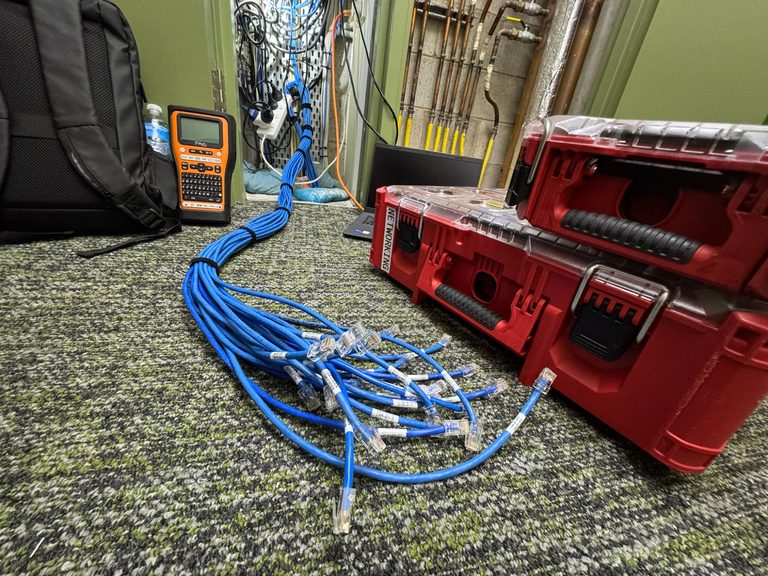
Whether it's one panel re-terminated or a full comms room build — send through your details and Chris will get back to you with straight advice and a fixed price. Prefer to talk? Call 0412 853 618. No pushy sales, just solid work.
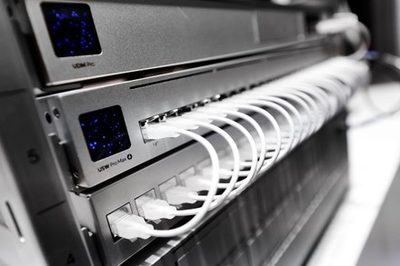
A patch panel is where every cable in your building lands — and it's where good networks are made or broken. A cleanly terminated, properly labelled panel makes faults easy to trace and changes take minutes. A messy one costs you money every time a technician opens the cabinet door.
Unified Network Solutions has installed and terminated network patch panels across Brisbane for over 15 years — from single wall-mount cabinets in suburban offices to multi-rack comms rooms in CBD towers. Whether you need a new Cat6 patch panel terminated, a UniFi patch panel built into a Ubiquiti rack, or a fibre patch panel spliced and certified, the work is done by a registered cabler and proven with test results.
Cat6, Cat6A and fibre patch panels installed and terminated in new comms cabinets, fitouts, and network upgrades — sized with spare capacity for growth, not just today's count.
Replacing tired or failed panels, re-punching suspect terminations, and upgrading Cat5e-era panels to Cat6A so the panel is no longer the weakest link in the channel.
Machine-printed port labels, a port schedule mapping every outlet, and Fluke DSX certification results — so anyone can trace any cable in minutes, years from now.
We're brand-agnostic and install the panel that suits your cabinet, your cable, and your budget — terminated to the same standard every time.
The workhorse for most Brisbane offices. 24-port and 48-port Cat6 patch panels, punched down to TIA-568B, tested port by port. Ideal for gigabit networks with PoE phones, APs and cameras.
For 10-gigabit backbones, high-wattage PoE++ and future-proofed fitouts. Cat6A panels demand more careful termination to hold performance — exactly the kind of fussy work we enjoy.
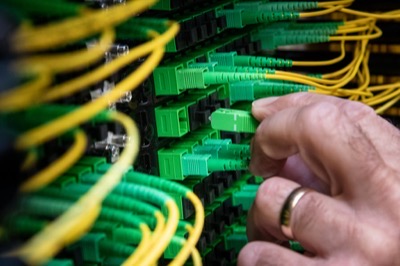
Fibre optic break-out trays and patch panels for backbone links — spliced, terminated and labelled, with OTDR results to prove every core. The tidy end of your fibre runs.
Building a UniFi rack? We install Ubiquiti patch panels and accessories so the whole cabinet — switch, panel, cable management — looks and performs like one system.
Voice services terminated alongside data with clear separation and labelling, so the one cabinet cleanly serves phones, data, and building systems.
From a compact wall-mounted panel above a small office cabinet to multiple 48-port panels in a full 19-inch rack — sized and laid out for the space you actually have.
Most intermittent network faults we get called to find trace back to a termination — a punch-down done in a hurry, pairs untwisted too far, or cable strain on the back of the panel. The panel is the single most handled point in your cabling, so it has to be done right.
Our terminations follow the same discipline on every job:
The difference between a 5-minute fix and a 2-hour fault hunt is usually the patch panel documentation.
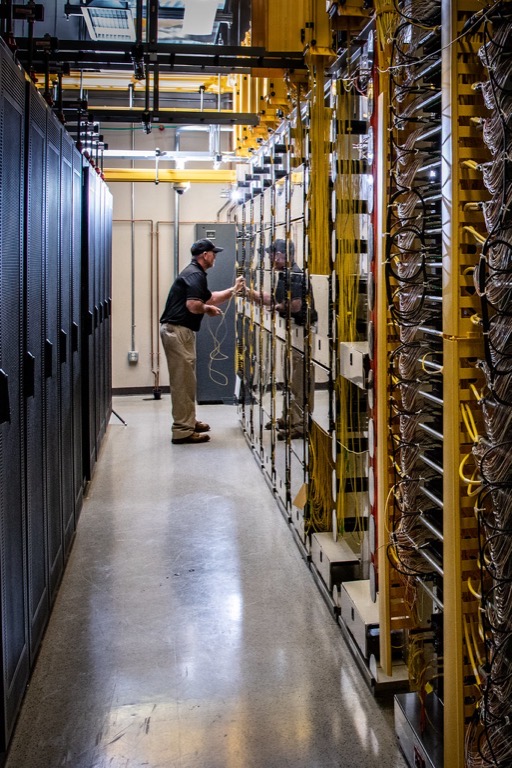
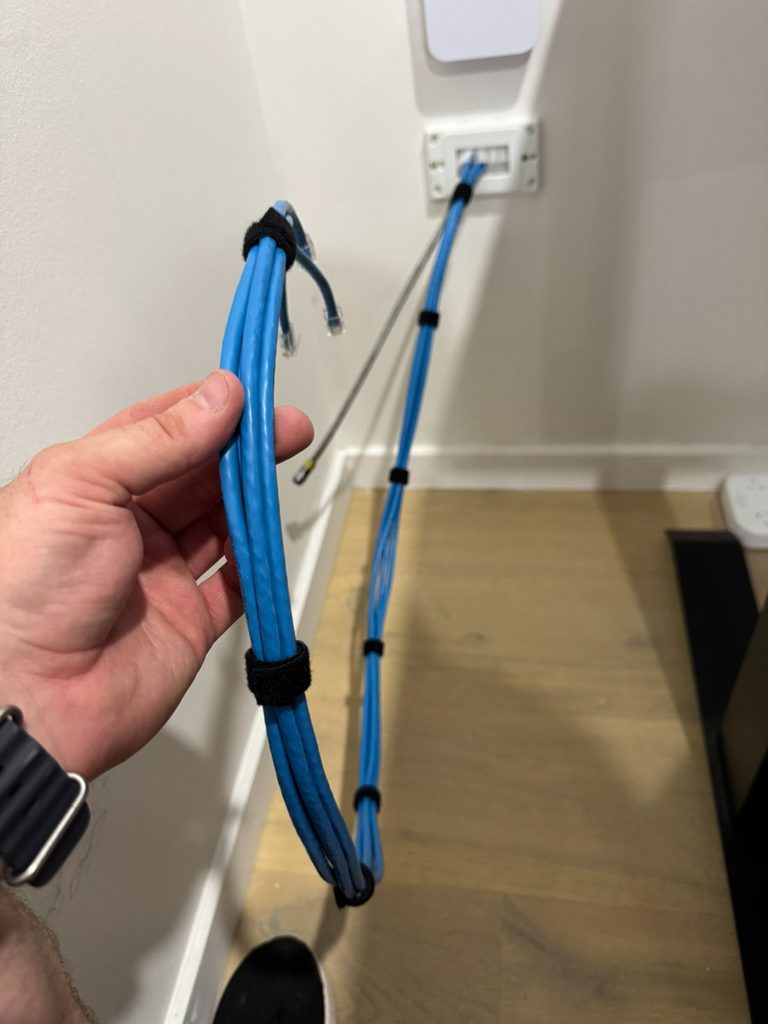
Inherited a spaghetti cabinet? We re-terminate and re-dress existing hardware, replace damaged jacks, and bring order to comms cabinets that have grown messy through years of ad-hoc changes — usually without replacing the cabling itself.
A tidy-up typically includes re-dressing cables into proper cable management, re-labelling every port against a fresh port schedule, testing suspect runs, and photographing the finished cabinet for your records. It's some of the most satisfying before-and-after work we do.
If the cabinet itself is the problem — too small, badly located, or overheating — we'll tell you straight and quote the right fix, whether that's a larger data cabinet or a relocation.
Where the patch panel work happens changes how we plan it. Both end at the same standard; the path there is different.
In a new office fitout or comms room build, the patch panel goes in as part of the structured cabling sequence: cabinet mounted, cable hauled and dressed into the rack, then every run terminated onto the panel in one organised pass. This is the cheapest, cleanest time to get the panel right — there's no live network to work around and the labelling scheme can be agreed with your IT team before the first punch-down.
We coordinate with builders and electricians on the timing so the network patch panel is terminated, tested, and documented before your furniture arrives — your IT provider walks into a working comms room, patches the switch, and the office is live.
Adding or replacing a patch panel in an operating business is a different discipline. The cabinet is full, half the cables aren't labelled, and every port we touch is someone's phone or workstation. We map before we move: identify what each run feeds, stage the work in small batches, and agree any brief outage windows with you in advance — often after hours, at no premium for standard jobs.
The result is the same as a new build — terminated, tested, labelled, documented — but the business keeps trading while it happens. This is most of the patch panel work we do across Brisbane, and it's where the IT background genuinely matters.
The panel never works alone. How it relates to your switch determines how usable the cabinet is for the next ten years.
We patch it to your switch in a logical, documented order — port 1 to port 1 where possible — with patch leads cut to length or correctly sized, not a metre of slack looped through the cable management. The port schedule records every mapping.
Phones, access points, and cameras all draw power through the same panel. We confirm the switch's PoE budget against what's actually hanging off each port, and flag where high-wattage PoE++ devices need Cat6A terminations to behave over long runs.
A stuffed cabinet cooks its own equipment. We lay out panels, switches, and cable management so air can actually move — and tell you straight if the cabinet needs a fan kit or a bigger home before equipment starts failing in summer.
1. Termination quality. The panel must perform to the same category as the cable — a Cat6A run terminated badly tests as worse than Cat5e. Every port we punch is tested, not assumed.
2. Capacity planning. A panel that's full on day one is a panel you'll pay to replace. We size panels and cabinets with the spare ports your growth actually needs.
3. Documentation. Labels and a port schedule turn your panel from a wall of identical sockets into a map. Any technician, any time, can trace any port — that's the standard.
We check your cabinet space, cable counts, categories, and growth plans — on site or from photos and plans for straightforward jobs.
A clear scope and a fixed price: panels, terminations, testing, labelling, documentation. No hourly rates, no extras invented on the day.
Panels mounted, every port terminated and dressed, then tested with the Fluke DSX. Failures are fixed on the spot, not noted for later.
Machine-printed labels, port schedule, test results, and photos — a handover pack your IT team or MSP can run with from day one.
We come from an IT background — we understand the network that depends on the panel, not just the punch-down tool.
ACMA Open Cabler registered (#42489) with comprehensive insurance. Every installation meets AS/CA S009 and Australian telecommunications standards.
Commercial cabling and network infrastructure across Brisbane and South East Queensland — offices, warehouses, schools, and medical sites.
We work white-label for IT companies and MSPs who need reliable physical infrastructure without running their own field team. No poaching, no branding, complete discretion.
As a guide, supplying and terminating a 24-port Cat6 patch panel — punched down, tested, and labelled — typically sits in the $400–$700 range depending on cable condition and cabinet access, with 48-port panels and Cat6A priced accordingly. Fibre panels and FOBOTs are quoted per termination. Where it's part of a larger fitout or comms room build, the panel work is bundled into the per-point price. We quote fixed prices after seeing the site or photos — call Chris on 0412 853 618.
Usually, yes. If the installed cable has enough service slack at the cabinet, we can re-punch suspect or failed terminations onto the existing panel or a new one without touching the cable runs themselves. We test each re-terminated port with the Fluke DSX to confirm it now passes. Where a cable is physically damaged or too short to re-terminate, we'll tell you before any work starts.
The category of the panel has to match the category of the channel you want. A Cat6 panel supports gigabit (and 10Gb over short runs); a Cat6A panel maintains 10-gigabit performance over the full 100-metre channel and handles high-wattage PoE++ with better heat behaviour. Mixing categories drags the whole channel down to the weakest component — pairing Cat6A cable with a Cat6 panel wastes the cable you paid for.
Yes — we install Ubiquiti patch panels and accessories as part of UniFi rack builds, alongside UniFi access point installations and switching. If you're standardising on the UniFi ecosystem, we'll build the cabinet so the panel, switch, and cable management work as one tidy system.
Count every cable that lands in the cabinet today — data points, access points, cameras, phones — then add room to grow. As a rule of thumb we size panels at roughly 25–30% spare capacity. Standard panels come in 12, 24, and 48 ports; it's almost always cheaper to install the larger panel now than to add a second one later.
Always — it's included, not an extra. Every port gets a machine-printed label matched to the outlet at the far end, and you receive a port schedule mapping the whole panel, plus Fluke certification results for each run. That documentation is what makes every future move, add, or fault a five-minute job instead of an afternoon.
Mostly, yes. Re-dressing and labelling can be done live with care. Where ports have to be re-terminated or moved we stage the work — a few connections at a time, or after hours — so your business keeps running. We agree the approach and any brief outage windows with you before we start.
Brisbane CBD and metro, Logan, Ipswich, Redlands, Moreton Bay, Gold Coast, and the Sunshine Coast. For larger projects we can service regional Queensland by arrangement.
We install and terminate patch panels across Brisbane CBD, Fortitude Valley, South Brisbane, Newstead, Woolloongabba, and the wider metro area — plus Logan, Ipswich, Redlands, Moreton Bay, the Gold Coast, and the Sunshine Coast. From a single wall-mount panel in a suburban office to multi-rack comms rooms in CBD towers, the standard is the same: terminated, tested, labelled, documented. For larger projects we can service regional Queensland by arrangement.
Fixed-price quote, certified terminations, and a cabinet you'll be proud to open. Call Chris or send the form — either way you'll get straight answers within one business day.
Call 0412 853 618 Get a Quote Online Unified Network Solutions