If your cameras record everything and prove nothing, the system has aged out. We upgrade old CCTV across Brisbane — analogue to IP migration, HD camera upgrades, recorder replacement and camera relocation — built on cabling that's tested before it's trusted, by the registered cabler the infrastructure layer actually requires.
Prefer to talk? Call Chris — 0412 853 618
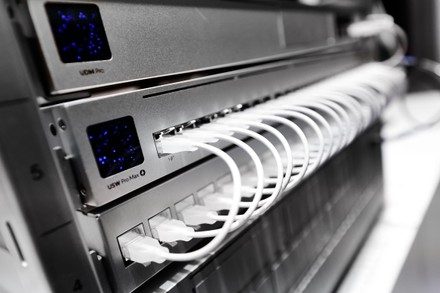
A dead DVR, footage too blurry to use, or cameras pointing at how the site worked a decade ago — describe the system and the frustration, and Chris will come back with straight advice and a fixed price. Prefer to talk? Call 0412 853 618.
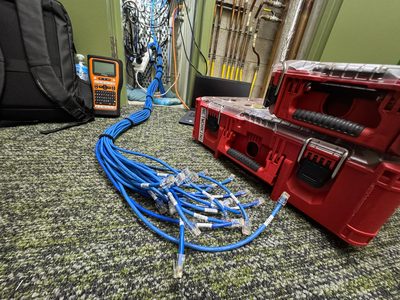
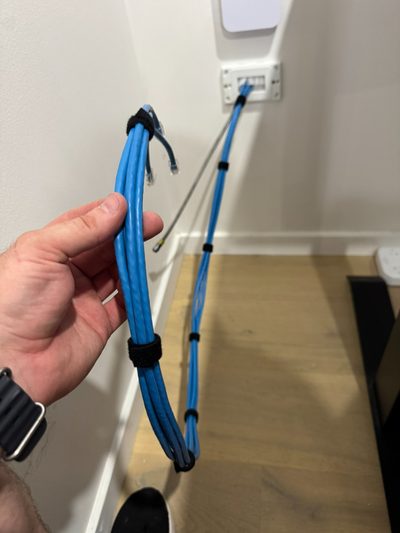
Every old CCTV system fails the same way: not with a bang, but with footage that turns out useless on the one day it mattered. A face that's eight blurry pixels, a plate the camera almost caught, a DVR that recorded over the incident — the analogue era's greatest hits. Meanwhile the cameras kept dutifully "working", which is why nobody upgraded sooner.
Unified Network Solutions approaches a cctv upgrade as the infrastructure project it really is. The cameras are the visible 30%; the decisions that make the upgrade perform are underneath — which existing cable runs test well enough to reuse, what the PoE budget needs to be, how the recorder sits on the network, and whether the coverage plan still matches how your site actually operates. We test first, design from measurements, and migrate systems analogue-to-IP on cabling certified under ACMA Open Cabler #42489 — so the new system's first bad night is also its first good story.
The analogue to ip upgrade is the single biggest leap a camera system can make. Analogue resolution detects that someone was there; IP resolution identifies who. One modern camera covers what three analogue units squinted at, remote viewing becomes genuinely usable instead of theoretically possible, and recording moves from fragile DVR hardware to network storage with retention you choose rather than inherit.
Our migrations are infrastructure-led: existing runs tested for reuse, new Cat6 where the copper doesn't make the grade, PoE switching sized with real camera draw figures (infrared at night is the classic budget-breaker), and the recorder properly placed on the network — segmented, secured and reachable from your phone without being reachable from the internet at large. Hybrid recorders bridge the transition where cameras migrate in stages.
The end state is a camera system that's a well-behaved network application — documented, expandable, and boring in the way security infrastructure should be.
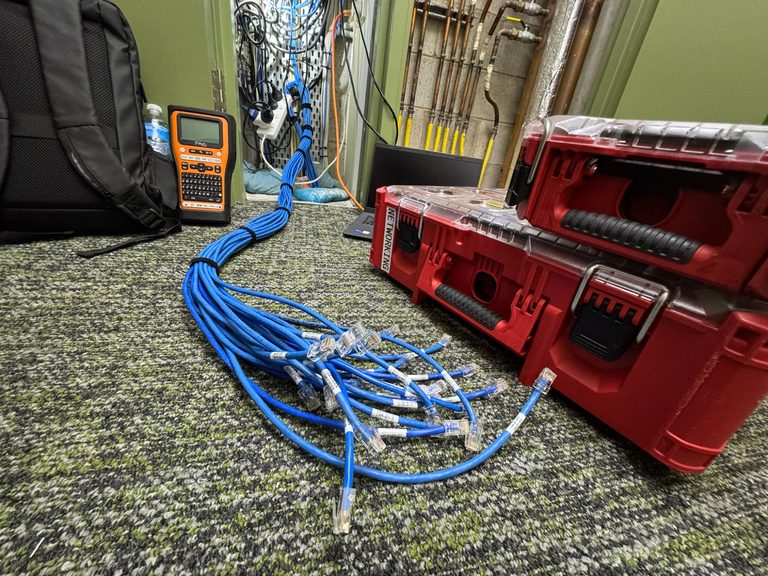
Cabling reuse is where upgrade quotes diverge by thousands. We answer it with a tester, not a guess — before the quote, not after the deposit.
Cat5e/Cat6 usually survives. Existing data runs that certify cleanly carry new IP cameras as-is — the cheapest metres in the whole project are the ones already in your ceiling.
Coax gets a measured verdict. Sound RG59 can carry IP over converters where re-running is hard; corroded coax can't carry anything worth keeping. The meter decides, per run.
The quote holds because we tested. Reuse decisions made with instruments don't unravel mid-job — what we quote on day one is what you pay at handover.
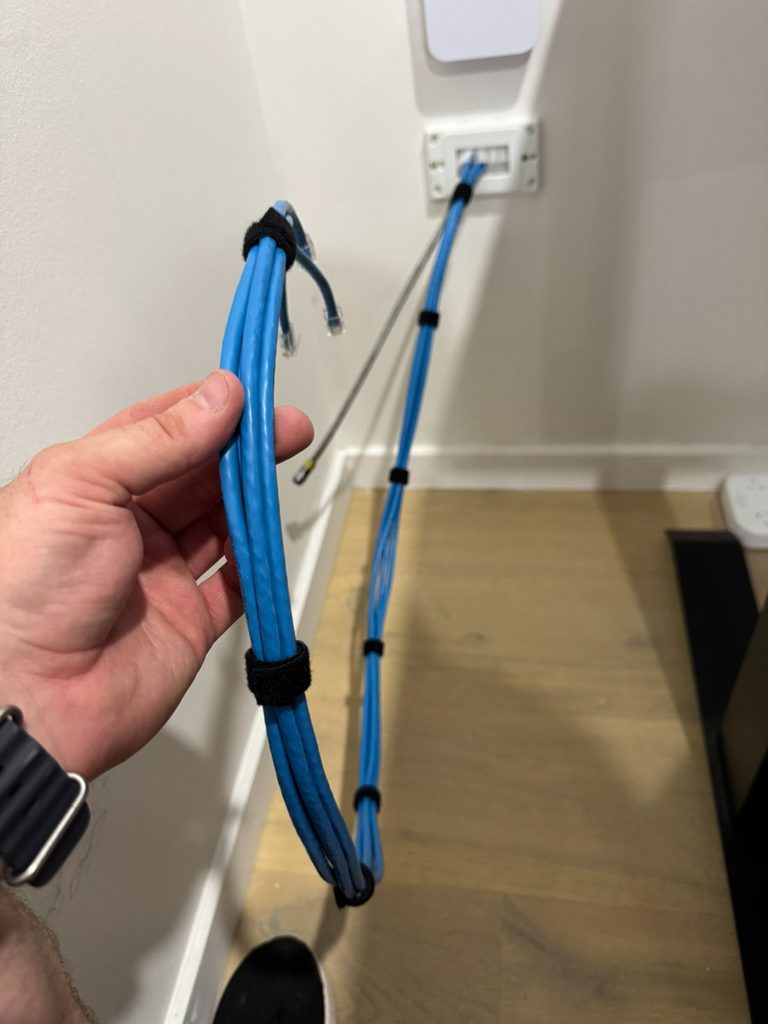
Most camera systems were aimed at how the business worked the year they were installed — and businesses move: new entries, rearranged stock, a yard that didn't exist, a till that did. Half the value in many a cctv upgrade isn't sharper cameras; it's camera relocation and a coverage plan drawn from how the site operates now.
We re-plan coverage around evidence quality: faces at entry height, plates at gates, hands at registers — the views that decide whether footage is useful or merely present. Cameras get relocated or added with the cabling extended properly (in-ceiling and in-wall work under our ACMA registration), blind spots get named honestly, and over-covered areas give up their cameras to under-covered ones before anyone buys new hardware.
Old cctv replacement at end-of-life follows the same logic — the new system is designed from the current site plan, not pattern-matched onto the old camera positions out of habit.
Bigger sites rarely take a cctv upgrade in one bite, and they don't need to. A staged cctv upgrade sequences the work so every dollar lands where it helps most: the recorder and network head-end first — it improves every camera immediately and removes the most common single point of failure — then cameras by priority, entries and tills ahead of corridors, with hybrid recorders carrying old analogue cameras until their turn comes.
Critically, coverage never fully drops. New infrastructure goes in beside the old, cameras cut over in groups, and the outgoing system keeps recording until its replacement is proven. Always-covered zones — pharmacies, tills, gaming rooms — get their cutovers in the quiet hours. At each stage the site has a complete, working, documented system rather than a construction zone.
Schools, body corporates and multi-site retailers run this across budget years as a matter of course; the design just has to be built for it from the start, which ours are.
Old systems rarely announce their retirement; a cctv upgrade becomes urgent quietly. The tells, from the systems we replace every month:
Footage that proves someone was there but never who — the analogue resolution ceiling, and the most expensive pixel shortage in business, and reason one for a cctv upgrade.
One ageing box holding every recording, on borrowed time and proprietary drives — when it dies, the history dies with it.
Checking the site means driving to it, or an app that connected once in 2019 — modern systems put live and recorded view on your phone, securely.
Cameras that see beautifully at noon and grain at midnight — modern low-light sensors moved this goalpost years ago.
Coverage planned for a site layout that no longer exists — the blind spots are wherever the business grew since install day.
Insurers and licensing increasingly expect working, retention-compliant CCTV — "it records, mostly" is not the answer they're after.
The existing system walked and measured — cameras, recorder, and every cable run tested for reuse with instruments, not optimism.
Coverage re-planned for today's site, reuse-vs-new shown honestly, staging options laid out — one fixed price per stage.
New infrastructure in beside the old, cameras cut over in groups, the old system recording until its replacement is proven.
Night footage checked, retention verified, remote access secured, documentation delivered — and the old gear actually removed.
An upgrade is 30% cameras and 70% infrastructure decisions. We're the trade built for the 70%.
Every reuse decision measured before the quote — so the price you accept is the price you pay, and the system performs as designed.
PoE budgets, VLANs, secured remote access and certified cabling under ACMA #42489 — the IP camera system as proper network citizen.
Infrastructure here, and full security design through Chris's sister company Defensor Security — one accountable owner across the whole upgrade, no seam.
A typical eight-camera analogue-to-IP upgrade lands $4,000–$9,000 depending on how much existing cabling tests reusable, camera spec, and recorder choice. Smaller jobs — relocating a few cameras or swapping to HD on existing infrastructure — commonly run $800–$2,500. The biggest cost variable is cabling reuse, which is why we test before we quote. Fixed pricing from a site walk — call 0412 853 618.
Usually, decisively. Analogue tops out where IP begins: resolution good enough to identify rather than merely detect, coverage from fewer cameras, remote viewing that actually works, and recorders that don't chew tapes or proprietary drives. If your footage has ever been "there but useless" — a blur where a face should be — that's the analogue ceiling. The upgrade pays for itself the first time the footage is needed and is actually usable.
Often, and it's the biggest money question in any cctv upgrade. Existing Cat5e/Cat6 usually carries IP cameras as-is once tested. Sound coax can carry IP video over ethernet-over-coax converters where re-running is genuinely hard. Degraded or undocumented cable gets replaced. We test every run with instruments before quoting, so the reuse decision is measured rather than optimistic — and the quote doesn't change mid-job. More on the cabling layer at our CCTV cabling page.
Yes — camera relocation is half the value of many upgrades. Businesses change: new entries, new stock locations, a yard that didn't exist when the system went in. We re-plan coverage from how the site works today, relocate or add cameras with the cabling done properly under our ACMA registration, and aim cameras at evidence-quality views — faces at entries, plates at gates — rather than wide shots of nothing in particular.
Not necessarily. If the cameras and cabling test healthy, a recorder replacement — usually a modern NVR or hybrid recorder that accepts your existing cameras — revives the system for a fraction of full replacement. It's also a natural staging point in a cctv upgrade: new recorder now, cameras migrated to IP over time as budget allows. We test what survives, and quote the smallest fix that genuinely works alongside the full-upgrade path.
Yes — staging is standard for bigger sites: recorder and network head-end first (it benefits every camera immediately), then cameras by priority area — entries and tills before corridors — with hybrid recorders bridging old and new during the transition. Each stage leaves a complete, working, documented system. Body corporates and schools do this across budget years routinely.
No — upgrades are sequenced so coverage never fully drops: new infrastructure goes in alongside the old, cameras cut over in groups, and the old system keeps recording until its replacement is proven. Most works happen in business hours without drama; tills, pharmacies and other always-covered zones get their cutovers scheduled to the quiet hours. The old gear is decommissioned and removed at the end, not left rotting in the ceiling.
We service Brisbane CBD, North Brisbane, South Brisbane, Gold Coast, Sunshine Coast, Ipswich, Logan, Moreton Bay, Redlands, and the wider South East Queensland region. For larger projects, we can service regional Queensland by arrangement.
As long as you size for — that's a design decision, not an accident. Storage is calculated from camera count, resolution, frame rate and motion patterns; thirty days is a common commercial target, and insurers or licensing conditions sometimes specify minimums for your industry. Modern compression makes generous retention cheap compared to the analogue era. We do the arithmetic in the design and show you the retention the quote actually buys.
Because upgrades are infrastructure jobs wearing a security badge: the cameras are the easy part, while cable reuse decisions, PoE budgets, switching and recorder networking decide whether the upgrade actually performs. We bring ACMA-registered cabling and network engineering to that layer — and for the full security design picture, Chris also operates Defensor Security, so both ends of the job are covered without a finger-pointing seam between trades.
Analogue to IP migrations, HD upgrades, camera relocation, recorder replacement and staged old-system replacement — across Brisbane CBD and metro, Logan, Ipswich, Redlands, Moreton Bay, the Gold Coast, and the Sunshine Coast. Every cctv upgrade quoted from tested infrastructure, built on certified cabling under ACMA #42489, and handed over documented — with footage that finally does its one job on the one day it matters.
Camera count, system age, and what let you down — that's enough for a test-first assessment and a fixed quote. The next incident is coming either way; the question is whether the recording is worth watching.
Call 0412 853 618 Get an Upgrade Quote Online Unified Network Solutions