PA and paging systems, ceiling speaker fleets, background music for hospitality, and school bell systems — commercial audio is a cabling trade wearing headphones, and that's exactly the trade we are. Designed for the room, installed on cable runs done once and done right, by Brisbane network specialists.
Prefer to talk? Call Chris — 0412 853 618
A PA that nobody can understand, a café that needs music, a school bell system from another century — describe the space and the problem, and Chris will come back with straight advice and a fixed price. Prefer to talk? Call 0412 853 618.
Every commercial audio system — the PA that pages the warehouse, the ceiling speakers washing a café in music, the bell that moves four hundred students — is two projects in one: an acoustic design problem, and a cabling job. The industry is full of people who can do one of them. The muddy announcements, dead zones, and hum that haunt so many venues are what happens when the second project was an afterthought.
Unified Network Solutions installs commercial audio from the cable up: speaker runs sized and routed properly, 100V line and low-impedance systems matched to the space, amplifiers racked alongside the network gear they increasingly talk to, and zones configured so reception's volume isn't hostage to the kitchen's. As ACMA Open Cabler #42489 we're registered for the cabling pathways this work shares with data — one trade on site instead of two, and an audio installation documented like the infrastructure it is.
A public address system has one job: intelligible speech, everywhere it's needed, the first time. Warehouses page forklift drivers, medical centres call patients, offices make the occasional all-staff announcement — and in every case the difference between a PA system and an expensive noise generator is design: speaker placement matched to the space's acoustics, tap settings balanced so the speaker near the compressor is louder than the one near the desk, and zones that let you page dispatch without addressing the lunchroom.
Our pa system installation work covers the full chain — microphones and paging consoles, mixer-amplifiers, 100V line speaker runs (the commercial standard that drives dozens of speakers down one cable), horn speakers for noisy floors, and integration with your phone system so a desk handset can page a zone. Existing PA systems that have decayed into crackle and dropouts get diagnosed and rebuilt rather than ripped out by default; the cabling is often fine and the failures cheap.
Where a system carries emergency announcements, we design and install to suit the building's compliance requirements and coordinate with your fire contractor — clarity stops being a comfort feature the day it's reading an evacuation message.
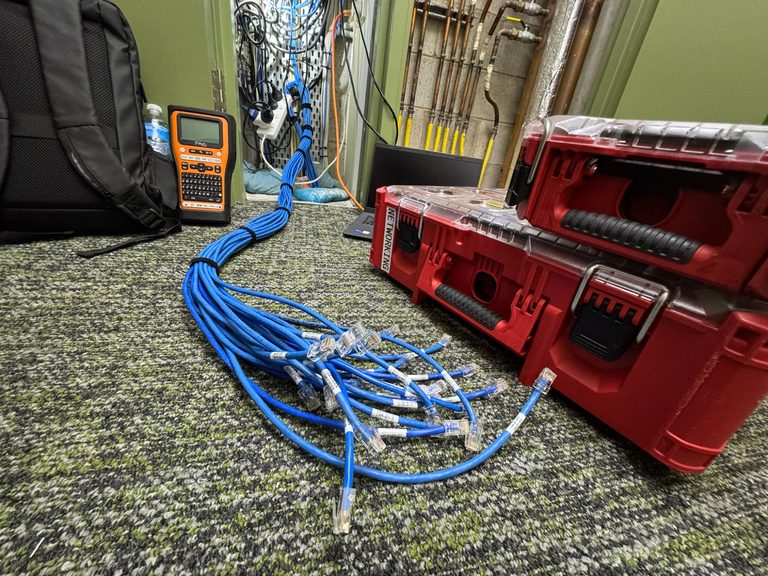
A background music system is the cheapest renovation a venue can buy — when it's designed, rather than a consumer soundbar doing its brave best.
Even coverage beats loud corners. More ceiling speakers at lower volume is the whole secret — guests converse comfortably everywhere instead of shouting in one spot and straining in another.
Zones that match the floor plan. Dining room, bar, courtyard, amenities — each zone with its own source and volume, controlled from behind the counter or a phone, not a ladder.
Streaming done legitimately. Commercial streaming services and licensing (OneMusic Australia, for most venues) sorted as part of the design — the playlist sounds better when it's not a compliance risk.
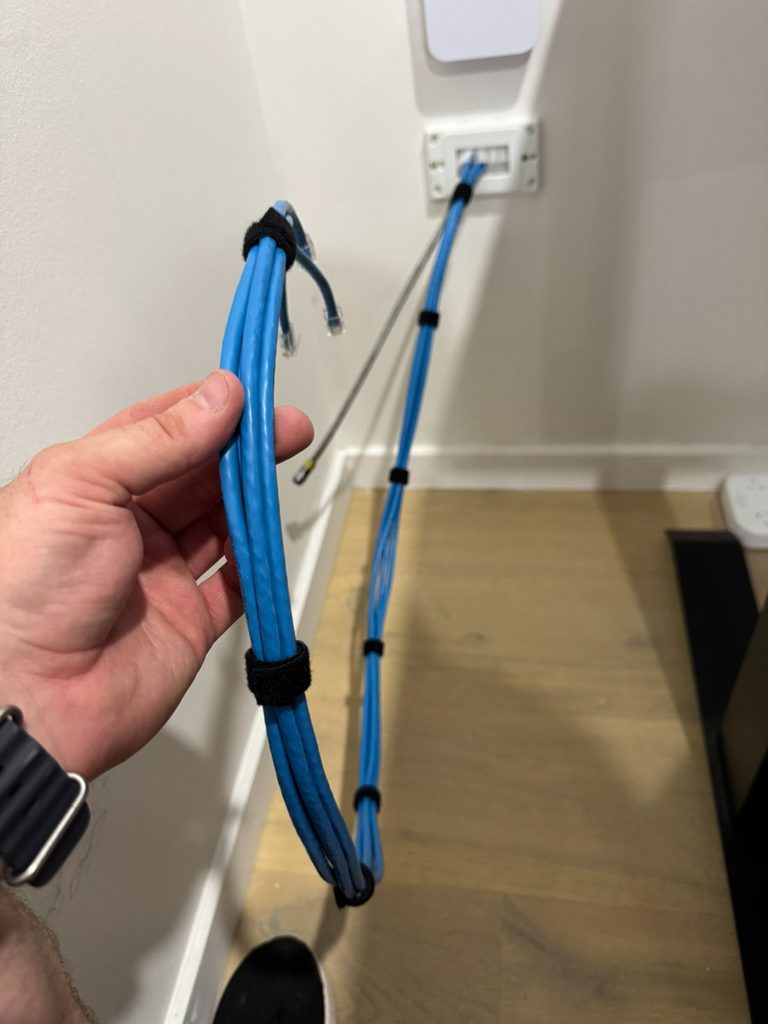
School PA is commercial audio with stakes: bells that run the timetable, announcements that reach every classroom and the far oval, and an emergency capability the whole site depends on. The systems we replace are usually decades old — a valiant amplifier from another era, speaker lines nobody has mapped, and a bell schedule that lives in one person's head.
We install modern school pa systems with scheduled bells (term dates, alternate timetables, and sports-day overrides handled in software), zoned paging so admin can address one block or the whole campus, clear coverage across classrooms, corridors and grounds, and integration with the school's network — increasingly these systems are IP-based, which puts them squarely in our home territory of structured cabling and switching.
Works are planned around term breaks where possible, documented for the facilities team, and built so the next upgrade is an expansion rather than another rip-out.
The brochure sells speakers; the result depends on everything around them. The parts of commercial audio installation that decide whether you love the system:
Spacing calculated from ceiling height and the room's acoustics — even sound with no dead zones and no hot spots, which is the entire difference between designed and guessed.
Distributed 100V line systems for paging and background music across many speakers; low-impedance where fidelity matters. Choosing correctly is the first dollar saved.
Speaker runs routed, separated from power, and terminated properly — the registered-cabler discipline that prevents the hum, crackle and mystery dropouts entirely.
Hearing loop and equivalent systems where the building code requires them — designed in from the start rather than retrofitted under duress at certification time.
Volume and source per zone, controls where staff actually are, and sensible limits — so closing staff turn everything off with one action, and nobody can accidentally deafen the dining room.
Modern audio rides the data network — IP paging, streaming sources, phone-system integration. We build the network and the audio, so they actually cooperate.
The physics is universal; the design never is. The same ceiling speaker behaves differently above a polished-concrete café floor and a carpeted office — venue shapes we work in weekly:
Background music systems with zones for dining, bar and outdoor areas — atmosphere that scales from Tuesday lunch to Friday night without a staff member touching an amp.
Even in-store music, paging for staff, and announcement capability — the audio layer customers only notice when it's wrong, kept permanently right.
Horn speakers that beat the forklift noise, zoned paging from office to floor, and rugged hardware mounted where pallets can't reach it.
Bell schedules, campus-wide PA, classroom speakers and oval coverage — plus the network underneath, which we likely also cabled.
Patient calling, discreet waiting-room sound, and speech-privacy masking where consults shouldn't carry — quiet competence, installed quietly.
All-staff announcement capability, lobby music, and meeting-room sound that pairs with the boardroom AV we already install.
Walk the space, hear its problems, map the zones — the design conversation that decides everything the hardware later does.
Speaker layout, amplification, zoning and control designed for the venue — quoted as a fixed price with the cabling included, not discovered later.
Runs routed and terminated to standard, speakers mounted cleanly, racks dressed properly — scheduled around trading hours where the venue needs it.
Zones balanced by ear and instrument, controls demonstrated to staff, and the system documented — so it keeps sounding right after we leave.
Audio companies subcontract the cabling; cablers guess at the audio. We're the overlap, qualified for both.
ACMA Open Cabler #42489 — speaker and network runs routed, separated and terminated to the standard that makes hum and crackle someone else's story.
IP paging, streaming, phone-system integration — commercial audio is converging on the data network, and the data network is our first language.
Design, cabling, hardware, tuning and documentation from one contractor — no audio-blames-cabler standoff, ever, because we're both of them.
“We wanted audio across a few different areas of the site and had no idea where to start. UNS set up the zones, explained how it all worked, and made it simple enough that staff actually use it. Way better than the DIY speaker setup we were considering.”
Small background music systems — a café with six to eight ceiling speakers, an amplifier and zone control — typically land $2,500–$5,000 installed. PA and paging systems for warehouses and offices commonly run $4,000–$12,000 depending on zones and coverage area, and school PA systems are quoted per campus. Every quote is fixed-price with the cabling included — call Chris on 0412 853 618 with the venue and we'll put a real number on it.
100V line (high-impedance) systems run many speakers down one cable with individual volume taps — the commercial standard for paging and background music because it covers large areas cheaply and reliably. Low-impedance systems (like home hi-fi) deliver higher fidelity to fewer speakers and suit bars, boardrooms and anywhere music quality leads. Most venues end up with 100V line, some with a hybrid; choosing wrongly is expensive, which is why design comes first.
Yes — hospitality background music is a staple of our commercial audio work: ceiling speakers laid out for even coverage, zones for dining, bar and outdoor areas, simple control from behind the counter or a phone, and streaming sources set up with commercial licensing in mind. The result is atmosphere customers feel rather than notice — and staff who never have to think about it beyond pressing play.
Yes — school PA is a speciality: scheduled bells with timetable, term-date and special-event handling, zoned paging across blocks and grounds, classroom and oval coverage, and emergency announcement capability. Modern systems are network-based, which suits us perfectly as registered cablers who build school networks anyway. We schedule installation works around term breaks and hand the facilities team real documentation.
Diagnose first — it's often cheaper than either guess. Crackle and dead zones usually trace to corroded terminations, perished speaker drivers, or an amplifier ageing out, while the cabling in the walls is frequently fine. We test the lines, isolate the faults, and quote repair against replacement honestly. Sometimes a venue needs a new system; often it needs four hours of fault-finding and a few components.
Yes — paging integration is standard in our designs: dial a code from any desk handset and address a zone or the whole site. It works with modern VoIP systems (3CX and Teams included) through SIP paging gateways or native integrations, and with most legacy phone systems too. One less console on the counter, and announcements come from wherever the person already is.
A hearing loop (audio induction loop) transmits sound directly to hearing aids switched to T-mode, and the building code requires hearing augmentation in many public spaces — counters, meeting rooms and auditoriums among them. Whether your space triggers the requirement depends on its classification and use; we'll tell you straight, and design loop or equivalent infrared/FM coverage into the system where it's needed rather than bolting it on at certification time.
We service Brisbane CBD, North Brisbane, South Brisbane, Gold Coast, Sunshine Coast, Ipswich, Logan, Moreton Bay, Redlands, and the wider South East Queensland region. For larger projects, we can service regional Queensland by arrangement.
Increasingly, yes — IP speakers and paging, networked amplifiers and streaming sources all ride the data network, and the audio industry is converging on it fast. That convergence is good news for buyers and demanding on installers: VLANs, PoE budgets and switching come into play. As network specialists first, we design audio onto the network properly — or run it traditionally where that's the smarter, cheaper answer for the venue.
Rarely — most hospitality and retail audio installs happen before open, after close, or across a quiet weekday morning, and we plan the noisy ceiling work for whenever the venue is empty. Schools get term-break scheduling, offices get after-hours options. The cabling is the bulk of the labour and the part most worth doing unhurried; we quote the schedule alongside the price so there are no surprises.
PA system installation, ceiling speaker fleets, background music systems, school PA and hearing augmentation across Brisbane CBD and metro, Logan, Ipswich, Redlands, Moreton Bay, the Gold Coast, and the Sunshine Coast — new commercial audio designed for the venue, tired systems diagnosed and revived, and the cabling underneath done to the standard the registration card implies. Fixed pricing, one trade for the whole job, and sound your customers feel rather than notice.
Tell us the venue, the rough size, and what the sound needs to do — that's enough for a design conversation and a fixed quote. Good commercial audio disappears into the building; the quote shouldn't take longer than the music to start.
Call 0412 853 618 Get an Audio Quote Online Unified Network Solutions