Every service in your building passes through one room most people have never seen. We install, jumper, audit, and remediate main distribution frames across Brisbane — the boundary where carrier meets building, and where decades of contractor shortcuts go to compound. MDF work is a dying craft; we kept it.
Prefer to talk? Call Chris — 0412 853 618
A service that won't connect, a frame that needs auditing, or a building MDF that's overdue for remediation — send the details and Chris will come back with straight advice and a fixed price. Prefer to talk? Call 0412 853 618.

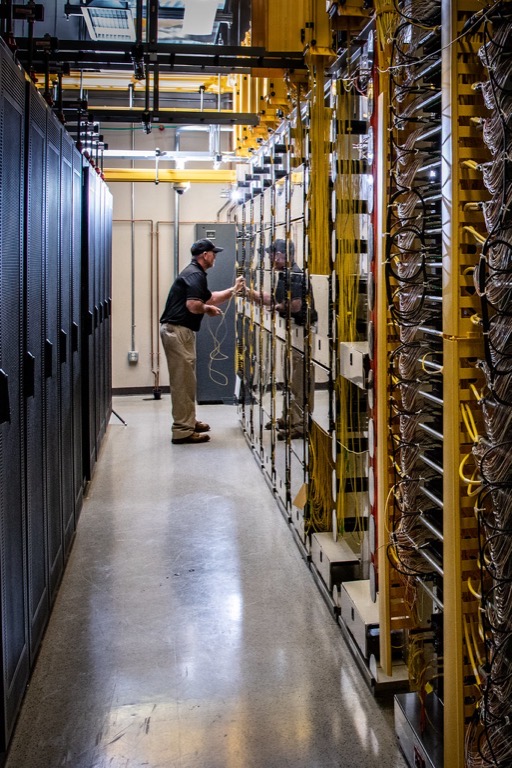
The main distribution frame — the MDF — is the most consequential room nobody looks at: the physical boundary where Telstra and NBN infrastructure hands over to the building's own cabling, and every tenancy's phone, internet, and data service crosses it via a jumper wire on a krone block. A well-kept MDF makes every new connection a five-minute job. A neglected one — and most are — makes every carrier visit a coin flip and every tenant churn a small crisis.
Unified Network Solutions does main distribution frame work across Brisbane and South East Queensland: MDF installation for new buildings, jumpering for service connections, audits that document a frame's true state, and the remediation jobs that drag fifty-year-old frames back to serviceability. It's specialist work that legally requires ACMA cabler registration (#42489 — ours), and practically requires a craft that's getting rarer every year as the old frame technicians retire out of the trade. We do it weekly, and we're keeping it alive. The mdf room is the building's most neglected asset: a krone block forest nobody maps, jumpers nobody owns. We treat the mdf room as infrastructure — each krone block traced, the mdf room documented, and the krone block forest finally legible. An mdf room serviced annually never becomes the mdf room that delays your NBN order.
In a multi-tenant building, communications arrive once and distribute many times. The carrier's lead-in lands in the MDF room — the building distributor — where it terminates on the carrier side of the frame. The building's own riser cabling terminates on the other side, running up to the IDFs (intermediate distribution frames) on each floor and onward to tenancies. Jumper wires across the frame connect the two worlds, one service at a time.
The IDF deserves a sentence of its own: each floor's intermediate distribution frame repeats the MDF's pattern in miniature, and a building is only as serviceable as its worst frame. That architecture makes the MDF the building's single point of truth — and its single point of accumulation. Every tenant who ever connected a service left jumpering behind; almost none of it was ever removed; and the frame records that explained it all usually stopped being maintained when the original building manager retired.
Understanding which side of the frame a problem lives on — carrier or building — is half of every fault we attend. It's also the boundary of responsibility: the carrier maintains their side; the building owns everything else, a fact that surprises most property managers exactly once.
Most Australian MDFs run on krone blocks — punch-down strips holding one pair per slot — and the difference between a working building and a flaky one is the discipline of the jumpering across them.
One service, one jumper, recorded. A clean connection is a single jumper wire from the carrier-side pair to the building-side pair, punched with the proper krone tool, and written into the frame records. Every step skipped becomes someone else's outage later.
The sins we undo weekly. Jumpers punched over live pairs, double-jumpered services, wandering wires with no destination, and bridge taps left from services cancelled in 2011 — each one degrading or killing a connection somewhere in the building.
Records are the asset. A frame card (or a clean spreadsheet) mapping every pair turns the MDF from folklore into infrastructure. Every jumpering job we do updates the records — and every remediation rebuilds them from physical truth.
Brisbane's building stock carries MDFs from every era — frames sized for three hundred copper phone lines now serving buildings that need twelve pairs and an NBN fibre distribution. The upgrade path isn't replacing the frame with a bigger one; it's rationalising: dead jumpering stripped by the kilogram, legacy blocks retired, NBN and modern services integrated cleanly, and the records rebuilt to match the physical frame.
An MDF audit is the diagnostic version — a documented snapshot of the frame's true state: live services, abandoned wiring, compliance issues, remaining capacity, photos. Property managers commission them at handovers and purchases; owners commission them when the third tenant in a year complains about connection dramas. The audit prices the remediation before the remediation prices itself.
Relocations happen too — renovations that move the comms room, frames migrating from the basement that floods. Carrier coordination included, because moving the boundary point means dancing with Telstra and NBN paperwork, and we've learned the steps.
New developments still need a building distributor — smaller than the frames of old, but just as load-bearing for the decades ahead.
A modern main distribution frame installation is mostly fibre distribution and a modest copper presence — sized for NBN architecture and tenant data services, not three hundred phone lines that will never exist.
MDF rooms get built during construction alongside the riser and structured cabling — carrier lead-in coordinated, frame mounted and terminated, IDF links proven before handover.
Every new frame hands over with complete records — the single cheapest gift a developer can leave a future building manager, and the rarest.
For builders and developers: the main distribution frame is the one part of the comms scope that carriers will judge your building by for fifty years. We build them to be judged well — and the same team handles the riser cabling, floor distributors, and tenancy infrastructure above it.
The MDF is common property — which makes it your problem, and makes us your specialist trade for it.
Buildings with chaotic frames generate the same ticket forever: "new tenant can't get connected." Remediation converts that recurring cost into one fixed project — and makes every future connection routine.
MDF work legally requires a registered cabler, and AS/CA S009 applies inside the room. We bring the registration, leave the records, and give the committee the paper trail that survives audits and insurance questions.
When NBN or Telstra technicians attend your building, an organised frame and someone who speaks their language turns appointments into completions. We attend on the building's behalf where it matters.
For managed portfolios we run MDF care as a standing per-building service — audit once, remediate where needed, then keep the records current as tenants churn. It pairs with comms room remediation where the building's data infrastructure shares the space, which it usually does.
A site look (or detailed photos) tells us the frame's era, state, and what the job actually is — jumpering, audit, or archaeology.
Scoped honestly: a single-service jumper is a short visit; a fifty-year frame rebuild is a project. You'll know which before anyone touches a wire.
Punched cleanly, live services protected, dead wiring stripped, carrier coordination handled — by a registered cabler who does this weekly, not annually.
Frame records updated or rebuilt, photos taken, documentation to the building manager — so the next connection is five minutes for whoever does it.
Frame craft is disappearing from the trade. We think that's exactly why it's valuable.
ACMA Open Cabler #42489 — MDF and krone work on customer cabling legally requires it, and plenty of the "MDF work" done without it is what we get called to fix.
We jumper krone frames and integrate NBN fibre distribution in the same visit — the rare overlap of legacy telephony skill and current network practice.
Fixed prices, written records, per-building standing arrangements, and reports a committee can read — built for how strata actually procures.
The MDF is the room or frame where a building's communications services physically arrive and get distributed — the boundary point where carrier cabling (Telstra, NBN) meets the building's internal cabling. Every phone line, NBN service, and tenant connection in a multi-tenant building routes through it, usually via krone blocks and jumper wires. When the MDF is organised, connecting a new service is minutes of jumpering; when it's chaos, every connection is an expedition.
In most Australian buildings, the building owner or body corporate owns and is responsible for the MDF and the internal cabling beyond it — carriers own only their network up to the boundary. That surprises many property managers, who assume Telstra or NBN maintain the frame. They don't, and won't. Maintaining it requires an ACMA-registered cabler, which is exactly the work we do for buildings and strata across Brisbane.
Simple MDF jumpering — connecting a new service from the carrier side to a tenancy — is typically a short fixed-price visit, a couple of hundred dollars. MDF audits with documentation run by building size. Full MDF remediation or rebuilds for buildings with decades of accumulated chaos are quoted after an inspection, usually in the low thousands — and they pay for themselves in every subsequent service connection. Call Chris on 0412 853 618.
Krone blocks are the punch-down terminal strips that populate most Australian MDFs, and jumpering is the craft of linking a carrier-side pair to a building-side pair with a jumper wire — one service, one jumper. It's precise, unglamorous work: the right pairs identified, punched cleanly with the proper tool, recorded on the frame's records. Bad jumpering is why services mysteriously die in buildings — wires punched over old ones, nothing labelled, records abandoned in 2009.
Almost always the MDF. Carrier technicians work to time budgets — if your frame is undocumented chaos, they'll connect to whatever pair looks free (sometimes someone else's), or leave a card saying they couldn't complete. An organised, documented MDF turns carrier visits into five-minute successes. We remediate frames precisely so this stops happening, and we attend carrier appointments for buildings that want their side of the boundary professionally represented.
Yes — an MDF audit documents the frame's actual state: services in use, abandoned jumpering, compliance issues, capacity remaining, and photos. Buyers and incoming property managers use it to price remediation before it becomes their surprise; sellers use it to demonstrate the comms infrastructure is in order. It pairs naturally with a building-wide cabling audit where the diligence warrants it.
Yes. Old frames built for hundreds of copper phone lines often serve buildings that now need a handful of copper pairs plus NBN fibre distribution and tenant data services. We rationalise the legacy jumpering, strip the dead decades, integrate the NBN infrastructure cleanly, and leave a frame sized and documented for what the building actually uses now — usually smaller, always clearer.
We service Brisbane CBD, North Brisbane, South Brisbane, Gold Coast, Sunshine Coast, Ipswich, Logan, Moreton Bay, Redlands, and the wider South East Queensland region. For larger projects, we can service regional Queensland by arrangement.
MDF installation, jumpering, audits, and remediation across Brisbane CBD and metro, Logan, Ipswich, Redlands, Moreton Bay, the Gold Coast, and the Sunshine Coast — commercial buildings, strata towers, mixed-use developments, and the older walk-ups whose frames have seen five decades of tenants. If your building's MDF room is a rumour even to the building manager, that's normal — and fixable at a fixed price. One remediation, kept current with records, outlives every tenant the building will ever have. From a single krone block re-termination to a full MDF room rebuild — every krone block punched to standard, every mdf room left documented.
Whether it's one jumper for a new tenant or a frame that needs dragging out of 1987 — send the building address and a photo of the frame, and we'll quote it fixed.
Call 0412 853 618 Get a Quote Online Unified Network Solutions