Apartment blocks, hotels, aged care, hospitals — anywhere one building feeds many TVs, an MATV system is the infrastructure doing it — and an ageing MATV system is usually the one failing at it. We design, install, upgrade and fault-find MATV and SMATV systems across Brisbane: measured with instruments, documented for the building, and fixed at the actual fault rather than the most billable one.
Prefer to talk? Call Chris — 0412 853 618
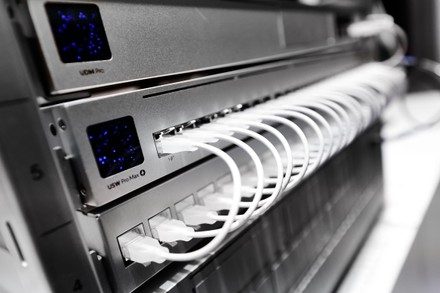
A building full of pixelating TVs, an antenna from the analogue era, or a new development that needs distribution designed — describe the building and the symptoms, and Chris will come back with straight advice and a fixed price. Prefer to talk? Call 0412 853 618.
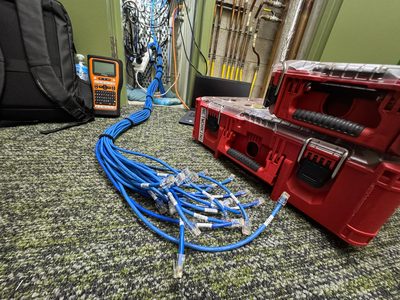
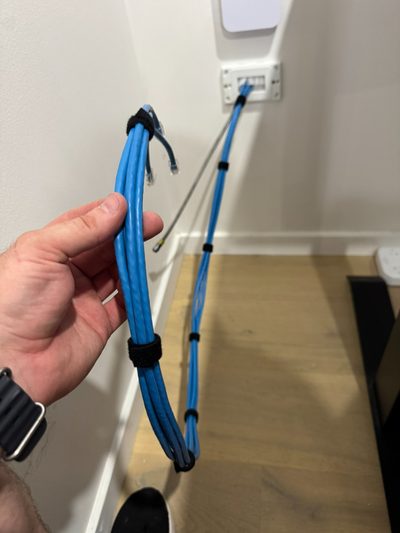
An MATV system — master antenna television — is the unglamorous infrastructure behind every building where many screens share one signal source: a quality antenna and headend, amplification sized to the building, and RF distribution cabling splitting cleanly to every outlet. Done right, it's invisible for a decade. Done wrong — or left to age past its amplifiers' will to live — it produces the pixelation, dropouts and dead floors that fill body corporate agendas.
Unified Network Solutions designs, installs, upgrades and repairs MATV and SMATV systems across Brisbane as a measurement-first trade: signal levels metered at the headend and the furthest outlet rather than eyeballed, faults localised with instruments before anything is replaced, and every system documented so the next technician inherits a map instead of a mystery. As ACMA Open Cabler #42489 we're registered for the risers, comms rooms and shared pathways this work lives in — the same spaces as our structured cabling work, which is no coincidence.
Apartment TV antenna problems arrive at committees the same way every time: a few owners complain about pixelation, someone gets a quote to "replace the antenna", and nobody knows whether that fixes anything — because nobody has measured the system. A body corporate antenna system is dozens of components between roof and wall plate, and the antenna itself is the culprit less often than the quotes suggest.
We work the strata way: a condition report with measured signal levels at the headend, each riser and representative units, plainly stating what's failing, what's fine, and what it costs to fix — repair against staged replacement, honestly compared. Then fixed-price works, scheduled with notice to residents, with common-area access coordinated through your building manager. The existing riser coax is frequently reusable, which is most of the cost conversation right there.
The deliverable is a TV distribution system the building stops thinking about, plus documentation lodged with the manager — levels, layout, equipment — so the next decade's decisions start from facts.
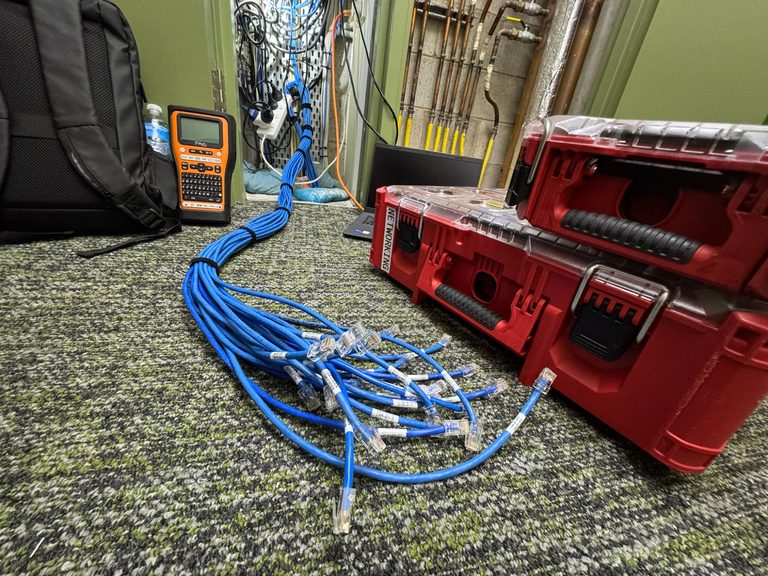
Hundreds of outlets, guests who judge the room by the TV, and residents who notice an outage in minutes — large-site MATV is where design discipline pays.
Headends built for service. Channel line-ups, in-house information channels and signage feeds injected centrally — maintained from one room instead of hundreds.
Foxtel business distribution. Commercial packages distributed legally through the system — every room or lounge served without a box balanced on every bracket.
Aged care realities respected. High-dependence viewers, works scheduled around routines, and monitoring-friendly equipment with documented levels and spares — because downtime there isn't a shrug.
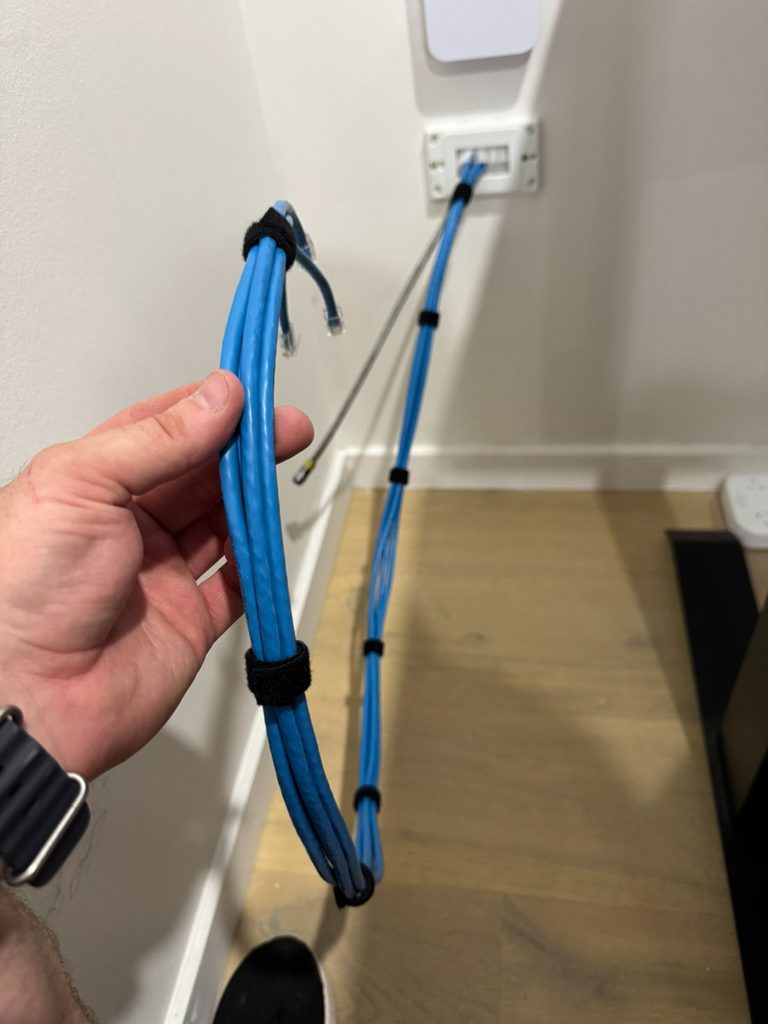
SMATV adds satellite to the master system: dishes and the commercial tv antenna combined at the headend, with satellite services converted or distributed so every outlet in the building can receive them through the same coax. For hotels and multicultural communities, that's international channels in every room; for MDUs, it's Foxtel-ready infrastructure without per-unit dishes sprouting from balconies — a line item most body corporates are delighted to delete.
The headend is where this work earns its name: filtering, amplification and channel processing balanced so the system delivers clean signal at the closest outlet and the furthest, not one or the other. We size RF distribution properly — launch amplifiers, line amps and taps calculated rather than guessed — because RF design done on arithmetic works in summer heat and storm season too, not just on commissioning day.
New developments get distribution designed alongside the data cabling — shared pathways, one coordinated install, and a building that's TV-ready and network-ready the day it opens.
Pixelation on level three, channels missing in the west wing, everything dead after a storm — MATV system faults look mystical and measure mundane. With a signal meter at the headend, the amplifiers and the outlets, the failure localises fast: water in a splitter, a corroded F-connector, a masthead amplifier quietly dying, or levels that were never balanced and finally drifted past the cliff.
Our MATV system fault-finding service is diagnosis-first: measure the chain, name the fault, quote the fix. Often it's embarrassingly small — a $1,500 repair where a $20,000 "full replacement" was being discussed. Sometimes the system genuinely is at end-of-life, and we'll show you the measurements that say so. Upgrades are staged where budgets need it: headend first, amplification next, outlets as access allows — each stage leaving the building better and documented.
Storm season is real here; lightning-adjacent failures and water ingress are half our MATV callouts. We fix the damage and the entry point both — otherwise we're back next summer, and not in the good way.
Every tv distribution system is the same six decisions wearing different buildings. Where the quality hides:
A commercial tv antenna sited and aimed off the meter — plus satellite dishes where SMATV calls for them. The whole system inherits this signal; it has to be right.
Filtering, amplification and channel processing in one serviceable rack — the system's brain, built so one visit services the whole building.
Launch amps, line amps, taps and splitters calculated leg by leg — clean levels at outlet one and outlet two hundred, by arithmetic rather than optimism.
Quad-shield coax, compression F-connectors, drip loops and sealed entries — the craft layer where storm season either matters or doesn't.
Channels over the data network where the building suits it — or MATV backbone with IPTV common areas. We install both, so the advice is unbiased.
Measured levels, equipment schedules and layout drawings lodged with the building — the difference between maintenance and archaeology, forever after.
Signal levels metered through the chain, the building walked, and a condition report written in committee-readable English.
Repair vs upgrade vs replacement compared honestly, RF design calculated, and a fixed price with staging options where budgets need them.
Headend built, distribution installed or reworked, every leg balanced to measured levels — with resident notice and access coordinated properly.
Levels verified at the nearest and furthest outlets, the system documented, and the paperwork lodged with the building manager.
TV distribution sits exactly between the antenna trade and the network trade. We hold both ends.
Every diagnosis starts with a signal meter and ends with documented levels — so the quote fixes the fault, not the symptom that was easiest to bill.
Condition reports, fixed quotes, AGM timing, resident notice — we work the way body corporates need contractors to work, without being chased.
Coax MATV and network IPTV are both in our toolkit — ACMA #42489 and network engineering under one roof, so the recommendation fits the building, not our van stock.
MATV — Master Antenna Television — is one shared antenna system feeding TV signal to many outlets: every apartment in a block, every room in a hotel, every lounge in an aged care home. One quality antenna and headend on the roof, amplified and split through RF distribution cabling, instead of a forest of individual antennas. SMATV is the same idea with satellite added. It's the standard for any multi-dwelling or multi-room building.
A small MATV system — a dozen outlets in a motel or office — typically runs $3,000–$7,000 installed. Apartment-block MATV upgrades commonly land $8,000–$25,000 depending on outlet count, riser access and how much existing coax is reusable. Fault-finding and repairs are often far cheaper than committees fear — many "dead building" calls end in a $1,500 amplifier and connector fix. Fixed quotes from a site inspection — call 0412 853 618.
Could be either, and guessing is expensive — which is why we measure instead. With a signal meter at the headend, the amplifiers and representative outlets, the fault localises quickly: a tired masthead amp, water in a splitter, a corroded connector, or signal levels never balanced properly in the first place. Pattern matters too — whole-floor failures point to a distribution leg, scattered ones to outlets. We find it, fix it, and leave the levels documented.
Yes — body corporate TV systems are a core part of this work: condition reports with measured signal levels for committees, fixed quotes that don't blow out mid-job, scheduled works with resident notice, and documentation the building keeps. We're used to the strata rhythm of quotes, approvals and AGM timing, and we report in plain English a committee can act on.
Yes — that's SMATV: terrestrial free-to-air and satellite services combined at the headend and distributed through the same coax to every outlet. Foxtel distribution for commercial venues, hotels and MDUs is handled with the appropriate commercial arrangements, and modern headends can convert satellite channels into the standard TV band so every room sees them without extra boxes.
Measure first. An apartment TV antenna that predates digital can sometimes still deliver workable signal — and sometimes a new antenna fixes nothing because the real faults are downstream in amplifiers and splitters. Our condition report measures the whole chain and quotes repair against staged replacement honestly. The coax in the risers is frequently reusable, which is most of the cost question answered.
In new builds and major refurbishments, yes — IPTV delivers channels over structured cabling, one cabling system for everything, and it's often the right call. In existing buildings with sound coax risers, MATV usually wins on cost. We design and install both, and hybrid systems too — an MATV backbone with IPTV in common areas is a common sweet spot. The building's bones make the decision, not our preference.
We service Brisbane CBD, North Brisbane, South Brisbane, Gold Coast, Sunshine Coast, Ipswich, Logan, Moreton Bay, Redlands, and the wider South East Queensland region. For larger projects, we can service regional Queensland by arrangement.
Mostly scale and serviceability: hundreds of outlets, in-house information channels injected at the headend, Foxtel business packages distributed legally, and systems maintainable without entering every room. Aged care adds its own realities — residents who watch a lot of TV and notice immediately when it breaks — so we build with monitoring-friendly headends, documented levels and spares, and schedule works around the home's routine.
Yes — MATV cabling shares pathways and rules with telecommunications cabling, and UNS carries ACMA Open Cabler registration #42489 with the coaxial endorsement context this work expects, plus full insurance. It matters practically too: distribution amplifiers, building risers and comms rooms are shared infrastructure, and the trades working in them should be registered for all of it — we are.
MATV system installation, SMATV and satellite distribution, body corporate antenna reports, Foxtel distribution and instrument-grade fault-finding — across Brisbane CBD and metro, Logan, Ipswich, Redlands, Moreton Bay, the Gold Coast, and the Sunshine Coast. Apartment buildings, hotels, aged care and commercial sites, with fixed pricing, strata-friendly process, and the measured signal levels that make TV the building's most boring system again.
Building type, rough outlet count, and what the TVs are doing wrong — that's enough for a straight answer and a fixed quote. The meter doesn't guess, and neither do we.
Call 0412 853 618 Get an MATV Quote Online Unified Network Solutions