Don't guess whether your cabling performs — prove it. We certify Cat6, Cat6a, and fibre installations with a calibrated Fluke DSX CableAnalyzer and hand you a pass/fail report for every single run. Our installs, someone else's installs, or the mystery cabling you inherited with the building.
Prefer to talk? Call Chris — 0412 853 618
Ten runs or ten floors — send through your details and Chris will get back to you with straight advice and a fixed price. Prefer to talk? Call 0412 853 618. No pushy sales, just solid work.
Cable certification is the difference between cabling that's claimed to work and cabling that's proven to. A certification test measures every electrical parameter of a cable run against its category standard with laboratory-grade equipment — and produces an auditable pass/fail record you can hold any installer to, including us.
Unified Network Solutions certifies cabling across Brisbane and South East Queensland with the Fluke DSX CableAnalyzer — the same equipment relied on by manufacturers for warranty certification worldwide. We certify our own installations as standard, and we're regularly engaged for independent third-party certification of cabling installed by builders, electricians, and other contractors. If you're paying for Cat6a performance, the report tells you whether you got it.
Copper and fibre, new and existing, ours and anyone else's.
Full permanent link or channel certification against TIA category standards — every run measured for wiremap, length, insertion loss, NEXT, PS-NEXT, return loss, and more.
OTDR trace testing and light source/power meter verification for multimode and single-mode fibre links — splice loss, connector loss, and total link budget, documented per core.
Independent certification of another contractor's installation — for builders, project managers, and businesses who want the claimed standard proven before final payment.
Testing what's already in your walls and ceilings against the standard it's supposed to meet — the factual basis for reuse-or-replace decisions during moves and refits.
When runs fail, the test data points at why. We quote and fix the actual faults — re-terminations, damaged sections — then re-test until the report is all green.
AS/CA S009 compliance records, calibration details, and labelled results that satisfy insurers, landlords, body corporates, auditors, and manufacturer warranty programs.
A certification report isn't a one-line "all good." For every cable run tested, you receive the measured result for each parameter of the category standard:
Each run gets a clear pass or fail, its cable ID matched to your labelling scheme, and the tester's calibration details. The digital report becomes part of your building's permanent documentation — and the baseline against which any future fault is diagnosed in minutes instead of hours.
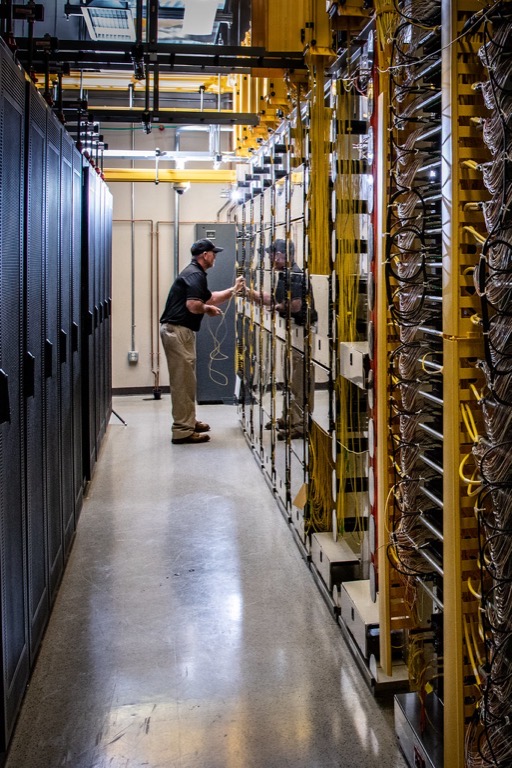
After thousands of runs tested across Brisbane, the same handful of causes account for nearly every failure we see.
Pairs untwisted too far at the jack, conductors punched onto the wrong pins, or cheap connecting hardware — shows up as NEXT failures. The most common cause by a wide margin, and usually fixed with a careful re-termination.
A horizontal run that wandered past 90 metres on its way around the building fails on length and insertion loss. No re-termination fixes physics — the honest answers are a closer cabinet or a fibre link.
Kinks from tight bends, crush damage from cable ties pulled like fencing wire, or staples through the jacket — visible as return loss anomalies at a specific distance, which the tester pinpoints to the metre.
This is why cable certification by an actual cabling contractor matters: the report doesn't just say a run failed, it tells us where and why — and we carry the tools and the registration to fix it on the spot rather than mailing you a list of problems.
Plenty of cabling gets certified because someone insists on proof. Here's who insists, and why.
Manufacturer warranties. Structured cabling warranty programs (25-year system warranties) require certification results from calibrated test equipment as a condition of cover. No certification, no warranty — regardless of how good the install was.
Project handovers. Builders, consultants, and project managers routinely require certification reports as a condition of practical completion — it's the evidence the cabling line-item was delivered to specification.
Insurance & compliance. After an incident, an insurer asking "was the cabling installed to standard by a registered cabler?" is answered with documentation, not memory. Regulated industries and body corporates increasingly require the same paper trail up front.
Same tester, two very different jobs.
Cable certification belongs at handover — every new run certified before the installer leaves site while fixing failures is cheap and the trades are still there. We certify 100% of our own installations as standard — it's included, not an extra — and provide the same service as the final QA step on other contractors' projects.
For new installs the pass rate should be effectively 100%. Anything less points to workmanship or materials, and it's far better discovered at handover than six months into occupancy when the intermittent faults start.
Cable certification of existing infrastructure is a different exercise. Older buildings accumulate cabling of unknown provenance — part Cat5e, part Cat6, part mystery. Testing the existing runs against current standards tells you exactly which cables can carry gigabit reliably, which will support an upgrade, and which are the hidden cause of the network complaints your team has normalised.
It's the factual basis for a reuse-or-replace decision during an office move or refurbishment — testing a floor costs a fraction of blindly recabling it, and the report often pays for itself in avoided recabling alone.
Two phrases appear on every cable certification report, and knowing the difference helps you read yours.
A permanent link test measures the fixed cabling only: from the patch panel to the wall outlet, excluding patch leads at both ends. This is the test that judges the installer's workmanship — the terminations, the cable, and the route — and it's the standard basis for cable certification at handover and for manufacturer warranty programs.
Permanent link is the certification we run on new installations, because it isolates the part of the system the installer is responsible for. If a permanent link passes, the installed cabling is right; anything that goes wrong later lives in the patch leads or the equipment.
A channel test includes the patch leads — the complete end-to-end path a switch and a computer actually communicate over. Channel certification is the right tool when diagnosing live network problems, because it tests exactly what the equipment experiences, cheap patch leads and all.
It's surprisingly common for a perfect permanent link to underperform as a channel because of a damaged or low-grade patch lead. That's a five-dollar fix that looks like a cabling problem — and it's precisely the kind of thing cable certification separates out, so nobody recables a wall to fix a patch lead.
All copper cable certification we perform is measured against the TIA category standards (with ISO/IEC class equivalents reported on request), and fibre certification against the relevant loss budgets for the link design. The report states the standard each run was tested against — so there's no ambiguity about what "pass" means.
Tell us the run count, cable types, and what the report is for — warranty, handover, audit, or assessment. Fixed price, no hourly rates.
Every run tested with the calibrated Fluke DSX (copper) or OTDR (fibre) — scheduled around your operations, after hours where needed.
Digital certification report within two business days — pass/fail per run, all parameters, calibration details, matched to your labelling.
Failed runs quoted separately, fixed, and re-tested — so the final report shows a clean, fully passing installation.
Certification is only as credible as the people and equipment behind it.
Fluke DSX CableAnalyzer with current calibration — results recognised by manufacturers for warranty purposes and accepted by builders, consultants, and auditors.
ACMA Open Cabler #42489, fully insured, and happy to test anyone's work — including being held to our own reports on our own installs.
Most testers hand you a list of failures and leave. We're cablers first — we diagnose why a run failed, quote the fix, and re-test until it passes.
Certification pricing depends on the number of cable runs and site access. Per-run rates drop significantly with volume — certifying an entire floor costs far less per point than certifying a handful of runs. We provide fixed-price quotes after understanding your scope: number of runs, cable types, and whether remediation of failures is included. Call Chris on 0412 853 618 for a quote.
Yes — third-party certification is one of our most requested services. Builders, IT companies, and business owners engage us to independently verify that cabling installed by another contractor actually meets the standard being claimed. You receive the same Fluke DSX test reports we produce for our own installations, with an honest pass/fail result for every run.
A pass means the cable run met every parameter of its category standard — wiremap, length, insertion loss, NEXT, return loss and more — measured with a calibrated Fluke DSX CableAnalyzer. A fail means at least one parameter is out of specification. The report shows which parameter failed and by how much, which usually points directly at the cause: a poor termination, excessive untwist, cable damage, or a run that's simply too long.
The test results tell us why a run failed, and most failures are fixable: re-terminating a poorly punched jack, replacing a damaged patch lead, or correcting a kinked section. We quote remediation separately from testing so you only fix what actually failed. After remediation, failed runs are re-tested and the final report shows everything passing — see our re-termination service.
Yes. Testing existing cabling tells you what you actually have — which runs meet Cat5e, Cat6 or Cat6a performance, and which are holding your network back. It's the reliable way to decide whether to reuse cabling during an office move or refurbishment rather than recabling on guesswork. We test against the claimed category and report run by run.
We test with the Fluke DSX CableAnalyzer — the industry-standard certification tester — with current calibration. For fibre, we use OTDR and light source/power meter testing. Certification results from calibrated Fluke equipment are recognised by manufacturers for warranty purposes and accepted by builders, consultants, and auditors.
Often, yes. Certification reports provide auditable evidence that your cabling was installed to standard by a registered cabler — documentation that matters for insurance claims, landlord and body corporate requirements, manufacturer warranty applications, and compliance in regulated industries. AS/CA S009 compliance documentation is included with our reports.
Standard turnaround is within two business days of testing — typically faster. You receive a digital report covering every run tested: pass/fail summary, individual parameter results, cable IDs matched to your labelling, and tester calibration details. For project handovers with a deadline, tell us the date and we'll meet it.
We provide cable certification in Brisbane CBD and across the metro area, Logan, Ipswich, Redlands, Moreton Bay, the Gold Coast, and the Sunshine Coast — single comms rooms through to multi-floor projects and project-completion testing for builders. Cable certification testing is scheduled around your operations, reports land within two business days, and quotes are fixed-price. For regional Queensland projects, contact us to discuss logistics.
Tell us how many runs and what the report's for — warranty, handover, audit, or peace of mind — and we'll give you a fixed-price quote for certification testing.
Call 0412 853 618 Get a Quote Online Unified Network Solutions