Notice boards that update themselves, menu boards that change at 11am sharp, foyer screens that finally say something current — digital signage works brilliantly when it's installed as infrastructure and dies quietly when it's a TV with a USB stick. We install the first kind: commercial screens, real content systems, and cabling done by the trade that builds networks.
Prefer to talk? Call Chris — 0412 853 618
A school foyer, a waiting room, menu boards or a corporate lobby — describe the space and what the screens should say, and Chris will come back with straight advice and a fixed price. Prefer to talk? Call 0412 853 618.
Every organisation that installs digital signage is making the same bet: that a screen will communicate better than the paper it replaced. The bet pays off when the system makes updating effortless — and fails publicly when it doesn't, which is why the most honest signage audit is walking past a foyer screen and checking the date on its content.
Unified Network Solutions installs digital signage that stays current because it's easy to keep current: commercial displays rated for the duty cycle, media players on wired network points (cabled under ACMA Open Cabler #42489), and content management configured so the office — not the IT person — owns the updates. Schools, medical centres, corporate lobbies, retail and hospitality each get the design their vertical actually needs, because a campus notice network and a menu board share hardware but almost nothing else.
Schools run on announcements, and digital signage for schools turns the morning chaos of notices into a two-minute admin task: daily messages pushed to screens in the foyer, tuckshop, staff room and walkways; sports results and event countdowns scheduled in advance; and parent-facing screens at pickup that finally say something more current than last term's newsletter.
The capability that sells it to principals is emergency messaging: every screen on campus switching to a lockdown or evacuation notice in seconds, triggered from admin — a communication channel that doesn't depend on everyone hearing the PA. It pairs naturally with the school PA systems we install, and rides the campus network we're often also the ones who cabled.
Installs run around term breaks, screens mount where students can't reach them, and content permissions are set so the office runs daily notices while marketing owns the templates. State, Catholic and independent schools all run this pattern — the only variable is how many screens the campus starts with before asking for more — in our experience, foyer first, tuckshop within the year.
Medical centres get more from digital signage than almost any vertical, because the audience is captive and the information genuinely useful: queue and patient-calling displays that reduce the reception interruptions, health promotion content that does quiet work while people wait, flu-clinic and bulk-billing messaging updated from the practice manager's desk, and after-hours information on the screen facing the street.
Privacy is designed in, not hoped for — calling displays show first names or numbers only, and anything patient-adjacent is configured to be waiting-room-appropriate. The screens pair with waiting room TV where practices want entertainment alongside information, and everything rides wired network points because a frozen queue display helps nobody's blood pressure.
Specialists, dental, allied health and veterinary practices run the same pattern at their own scale — usually one or two screens doing the work of a thousand reception conversations, installed in an afternoon the practice barely notices.
Corporate signage is internal communications with a pulse — and a lobby screen is the cheapest renovation a reception can get — and the only one that changes weekly.
The lobby that introduces you. Brand content, visitor welcomes and live company news at the front door — the first impression updated weekly instead of framed once a decade.
Internal comms people actually see. KPIs, shout-outs, safety stats and town-hall notices on screens in kitchens and corridors — read by the people who never open the intranet, refreshed without anyone sending another all-staff email.
Meeting room & wayfinding screens. Room booking panels and directional displays that pair with our boardroom AV work — one contractor across the lot.
Retail digital signage earns its keep at the moment of decision: window screens that pull foot traffic, in-store promotion displays that change with the calendar instead of with the laminator, and price-and-product content pushed chain-wide from head office while each store keeps its local specials. It slots alongside the people counting and loss prevention infrastructure we install — same network, same visit, more value per screen, and one fewer contractor in the ceiling.
Hospitality leans on menu boards — landscape or portrait above the counter, dayparted so breakfast becomes lunch at 11am sharp, and updated from the office when prices move. Pubs and clubs add promo screens for events and specials that pair with the sports bar TV systems we build; cafés get single boards that do more work than a chalkboard ever did, without the handwriting — and with the lunch rush starting on time.
All of it runs on commercial panels rated for the duty cycle — because a menu board is on every trading hour of every day, and domestic TVs in that role retire early and unannounced.
Signage companies sell screens; the system is six layers, and reliability lives in the unglamorous ones:
Panels rated for 12–24hr duty and bright rooms — the spec difference that decides whether year three exists. Portrait, landscape and high-brightness window options.
System-on-chip screens or compact dedicated players — secured, updated, and recovering on their own after every power cut.
Browser-based CMS with templates, scheduling and per-screen targeting — configured so the daily update belongs to the office, not to IT.
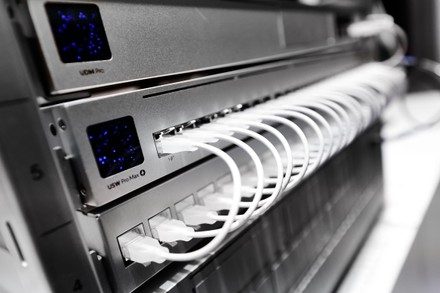
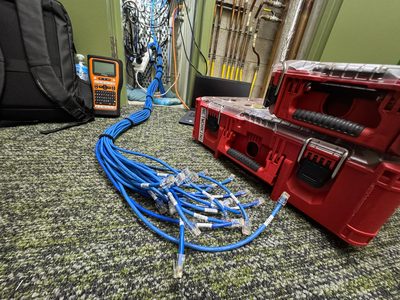
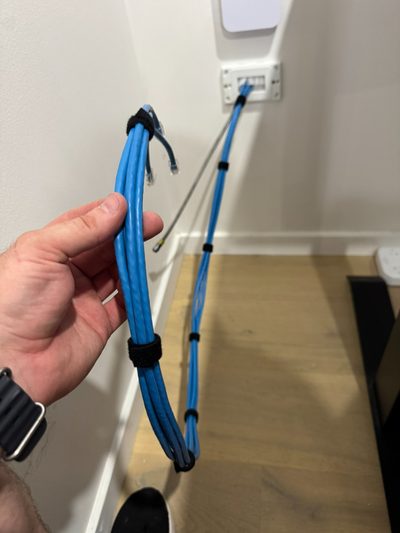
Wired points for anything that must not drop, in-wall runs done legally under ACMA #42489, and screens as documented network citizens.
Engineered fixing per wall type, ventilation-aware enclosures, power hidden in the wall — the install that reads as architecture, not aftermarket.
Screens that report in — a display that goes dark emails someone before a customer notices. Plus documentation, so screen twelve is an order, not a project.
What the screens should say, who updates it, and where eyes actually go — the honest conversation that stops new signage becoming expensive wallpaper by March.
Displays, players and CMS specified per vertical, cabling scoped — one fixed price, supply-and-install or install-only.
Network points in, screens mounted and powered invisibly, CMS templates and permissions built — around trading or term time.
The two-minute update demonstrated to the people who'll do it, monitoring armed, the whole system documented — screens that stay current long after the ribbon-cutting novelty fades.
A signage network is a network. Most signage companies rent that skill; it's our home ground.
Wired points, certified in-wall cabling under ACMA #42489, screens as managed devices — the reliability layer signage companies subcontract, done in-house.
Schools, medical, corporate, retail and hospitality each get their own pattern — because emergency messaging and menu dayparting are different jobs.
CMS configured for the office, monitoring that reports dark screens, documentation for growth — the system still earning its wall space in year four.
A single-screen installation — commercial display, media player, mounting, cabling and configuration — typically lands $2,000–$4,500 depending on screen size and wall construction. Multi-screen deployments (a school campus, a medical waiting network, menu boards across a venue) are quoted as projects, commonly $1,500–$3,000 per additional screen. Content management subscriptions run separately, usually $10–$40 per screen monthly. Fixed quotes always — call 0412 853 618 with the screen count.
Reliability and control. Real digital signage is a commercial display rated for all-day duty, driven by a media player and a content management system that schedules content remotely, recovers from power cuts, and reports if a screen goes dark. The TV-and-USB version works until the day someone needs to change the content, the TV input gets bumped, or the panel burns in — and someone's job becomes walking around with a USB stick. We install the version that's still working unattended in year four.
Yes — schools are our biggest signage vertical: campus notice screens that replace the pinboard chaos, foyer displays for parents and visitors, daily notices pushed from admin in seconds, and emergency messaging capability across every screen at once. Installations run cabled on the school network we often also built, scheduled around term breaks, and managed so office staff — not the IT coordinator — can update content.
That's the whole point — modern content management is a browser page: drag in slides, images or video, set schedules (menu changes at 11am, notices expire Friday), and every screen updates over the network. We configure templates and permissions at handover so the daily update is a two-minute job for whoever owns it, with no technical skills needed. If updating the screens requires calling us, we've installed it wrong.
Three layers: a commercial display rated for the duty cycle (12–24hr panels, brighter than domestic TVs), a media player (built into the screen on system-on-chip displays, or a separate compact unit), and the network connection that feeds it — wired for reliability wherever possible. We mount, cable and power the lot invisibly, with the player secured and the screen on the network as a managed, documented device.
Very well — medical digital signage handles queue and calling displays, health promotion content, practice messaging and after-hours information, all updateable from the practice manager's desk. It pairs naturally with the waiting room TV: one screen of entertainment, one of information, both installed and cabled properly. Privacy matters here — patient-calling displays are configured to show only what should be public.
Yes — that's standard CMS capability: every screen belongs to groups (site, area, screen type), and content targets any combination. A franchise can push a brand campaign chain-wide while each store keeps local pricing; a school can run different content in the staff room and the foyer. We set up the grouping logic at install so the flexibility is usable, not theoretical.
We service Brisbane CBD, North Brisbane, South Brisbane, Gold Coast, Sunshine Coast, Ipswich, Logan, Moreton Bay, Redlands, and the wider South East Queensland region. For larger projects, we can service regional Queensland by arrangement.
The classic failures are infrastructure: domestic TVs dying under commercial duty cycles, players on flaky WiFi dropping content, overheating in enclosed mounts, and nobody noticing a dark screen for a week. We prevent all four: commercial-rated panels, wired network points where it matters (cabled under ACMA #42489), ventilation-aware mounting, and CMS monitoring that emails someone the moment a screen stops checking in.
Because a digital signage network is exactly that — a network: screens are PoE-adjacent network devices, players need reliable connections, content flows over your infrastructure, and the in-wall cabling legally requires a registered cabler. Signage companies subcontract that layer; we are that layer, with the screens and CMS knowledge on top. One trade, the whole stack, documented — and the screens still working when the novelty wears off.
Digital signage for schools, medical centres, corporate offices, retail and hospitality — screens, media players, content management and the certified cabling underneath, across Brisbane CBD and metro, Logan, Ipswich, Redlands, Moreton Bay, the Gold Coast, and the Sunshine Coast. Supply-and-install or install-only, fixed pricing, content the office updates in minutes, and monitoring that notices a dark screen before your customers do. Signage as infrastructure — installed by the trade that builds the networks it runs on.
Venue type, screen count, and what the content should be — that's enough for a design conversation and a fixed quote. The wall space is already there; the question is whether it's working.
Call 0412 853 618 Get a Signage Quote Online Unified Network Solutions