Fibre backbone cabling for Brisbane buildings and campuses — riser fibre through multi-level buildings, MDF-to-IDF links, and inter-building backbone cabling between offices, warehouses and sheds. Designed with headroom, spliced properly, certified core by core.
Prefer to talk? Call Chris — 0412 853 618
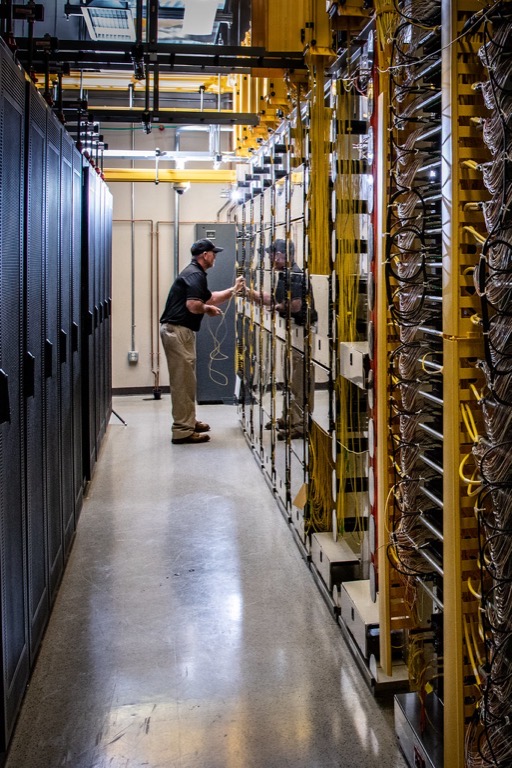
Linking floors, buildings or a whole site — tell us the layout and Chris will come back with a backbone design and a fixed price. Prefer to talk? Call 0412 853 618. No pushy sales, just solid work.

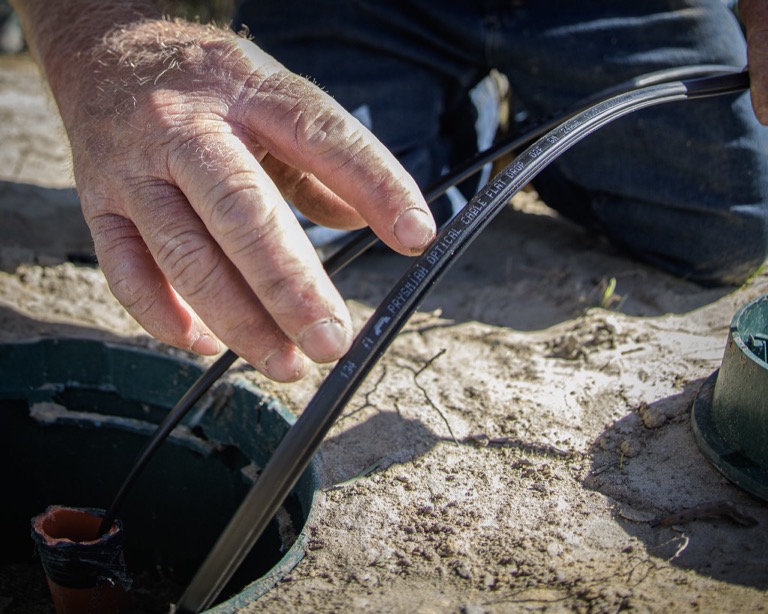
Fibre backbone cabling Brisbane for multi-level buildings and campuses — riser fibre, MDF-to-IDF links, inter-building runs and multi-core backbones built with core headroom for the future. Single-mode OS2, spliced, terminated and OTDR certified. Part of our fibre optic cabling service.
On this page:
The backbone is the spine of a commercial network — the high-capacity fibre that links your main distribution frame (MDF) to each floor's IDF, connects building to building, and carries the aggregated traffic of everything below it. Get the fibre backbone cabling Brisbane right and the rest of the network has room to grow; get it wrong and you're re-cabling risers in three years.
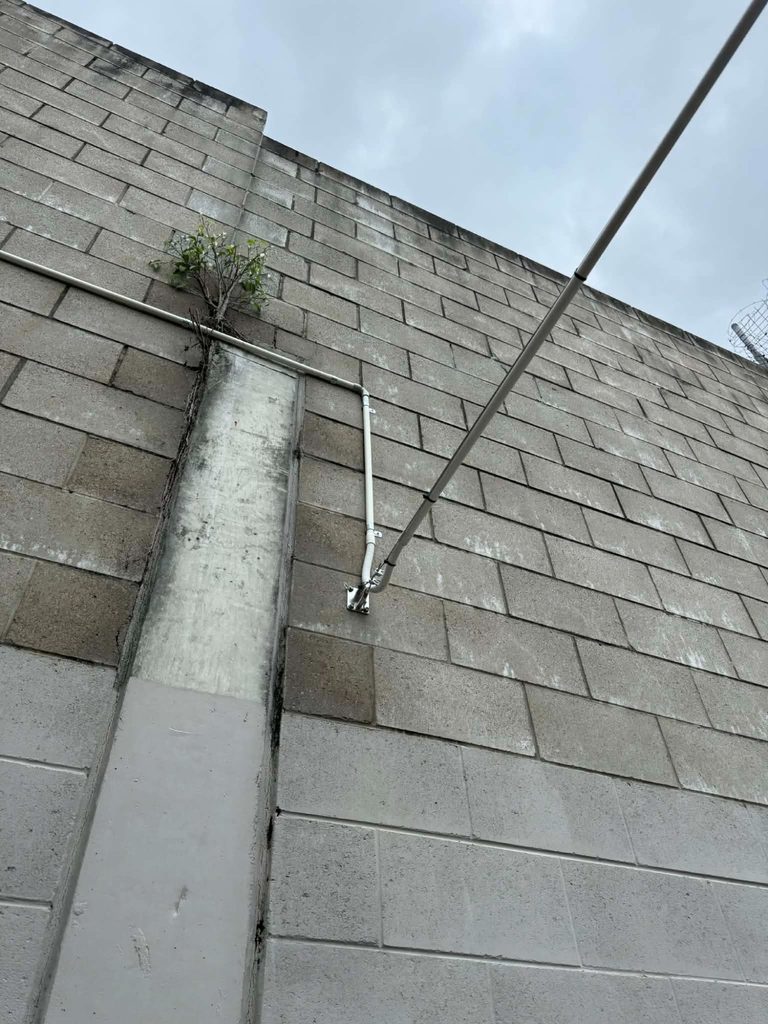
We design backbones with headroom. That means single-mode OS2 for distance and future-proofing, generous core counts so capacity is there when you need it, and proper riser and pathway management so adds and changes don't mean pulling everything out. Multi-mode OM4 has its place for shorter backbone segments where the economics suit.
Backbone work spans risers in high-rise, floor-by-floor IDF infrastructure, and inter-building campus runs through underground conduit. It ties directly into our underground cabling and comms room work — one team across the whole physical layer, one set of documentation.
Every backbone we install is fusion spliced, terminated into FOBOTs at each end, and OTDR certified core-by-core. As an ACMA Open Cabler (#42489), you get a documented, future-ready backbone — not just a cable between two cabinets.
What We Do
The cheapest moment to add fibre cores is before the cable is made; the most expensive is after the ceiling is closed. Physical installation — access equipment, labour, make-good — is the dominant cost of backbone cabling, and it's nearly identical whether the cable carries 6 cores or 24. So we size for the building's future: enough cores for tomorrow's switch uplinks, building systems, CCTV aggregation and the floor you haven't leased yet, plus dark spares for the things nobody has thought of.
Glass choice follows distance and upgrade path. Single-mode OS2 is the default spine: it carries 10, 40 and 100 gigabit over any campus distance, so upgrades become an electronics swap instead of a cabling project. Where an IDF sits forty metres from the MDF, multi-mode can save on optics — but mixing glass types through a building creates a patching minefield, so we keep the design consistent unless there's a real saving at stake.
Every design decision lands in the documentation: core schedules showing what's lit, what's terminated-dark and what's unterminated, so capacity planning five years from now is a spreadsheet lookup, not an archaeology dig.
In a multi-level building, the backbone is the riser fibre linking the MDF to the IDF on each floor. Done well, it's invisible: each floor's switch uplinks into local fibre, the floors aggregate at the core, and no horizontal cable run ever exceeds its 90-metre budget. Done badly — or left as the Cat5e trunk the building was born with — it caps every floor's performance no matter how good the desk-level cabling is.
Retrofitting riser fibre into an occupied building is a discipline of its own: riser shafts shared with decades of legacy cable, fire-stopping that must be reinstated correctly at every floor penetration, and works staged so tenants never notice. We've done it in CBD towers and three-storey walk-ups; the standard is identical, only the access plan changes.
At each end, cores land in FOBOTs — fusion spliced, labelled to a consistent convention, OTDR certified — so the IDF cabinet on level 3 reads like the documentation says it will. That's what makes the next network refresh a patching exercise instead of a discovery project.
Backbone cabling is quoted as a designed project, but the drivers are consistent enough to talk about openly. Inside a building, the price follows floors and access: riser condition, fire-stopping to reinstate at each penetration, whether work can happen in hours or needs nights, and the termination count at the MDF and each IDF. A clean riser in a cooperative building is a very different week from a heritage shaft packed with thirty years of abandoned cable.
Between buildings, civil works dominate. If usable pits and conduit exist, campus backbone cabling is mostly splicing and certification — the glass itself is cheap. If they don't, the trenching or boring is the project and the fibre is almost a rounding error, which is why we always survey existing pathways properly before assuming new ones are needed. Shared trenching with other services during site works is the single biggest cost saving available — if there's construction coming, tell us, and the backbone goes in the ground for a fraction of the standalone price.
What's always in the number: design with documented core schedules, fusion-spliced terminations into FOBOTs at every node, per-core OTDR certification against calculated budgets, and as-built documentation covering routes, splice plans and test results. A fibre backbone is a ten-year asset — the quote is written so the network you hang off it never has to guess what it's standing on.
And if you're weighing up whether backbone cabling is worth doing properly now or patching along for another year: price the outage, not the cable. One afternoon of a dead inter-floor link usually costs more in lost work than the difference between the cheap backbone and the certified one — and only one of them comes with traces proving it won't be your problem again.
MDF and IDF locations, riser paths, pit-and-conduit routes between buildings, distances and growth plans — the backbone design falls out of an honest site map.
Core counts with spare capacity, single-mode OS2 for distance and future speeds, diverse routes where uptime justifies it — backbone cabling is a ten-year decision, designed like one.
Fibre pulled through risers, trays and underground conduit with bend and tension control, then fusion spliced into FOBOTs at the MDF and each IDF.
Every core OTDR tested against its loss budget, both ends labelled, and as-built documentation delivered — routes, splice plans and traces your IT team keeps forever.
Riser fibre linking the MDF to IDFs floor by floor — new builds, retrofits into existing risers, and upgrades where a Cat5e-era backbone is strangling a modern network.
Inter-building backbone cabling across schools, industrial estates, resorts and farms — underground between buildings, spliced at each end, engineered for the distances involved.
You design the LAN; we deliver the physical backbone that matches the drawing — core counts, terminations and certified losses your design assumed, white-label if you prefer.
1. Headroom. The cost of pulling 24 cores instead of 12 is trivial next to the cost of doing the job twice. Backbones are sized for the network you'll have, not the one you've got.
2. Single-mode where it matters. OS2 backbone cabling carries 10, 40 and 100 gigabit over campus distances without breaking a sweat — multi-mode has its place, but the spine usually isn't it.
3. Certified cores. Every core in the backbone is OTDR traced before handover — because finding a marginal splice after the network is live means outage windows and angry floors.
4. Documentation that survives staff turnover. Core schedules, splice plans, route maps and traces, handed over and kept current — so the backbone cabling outlives the IT manager who commissioned it without losing its history.
Fusion splicer, OTDR and the pulling gear to do riser and underground backbone work properly — in-house, on every job.
We've inherited too many accidental backbones. Ours start with a site map and a core-count calculation, not a guess and a drum of whatever was in the van.
Documentation and spare capacity mean adding a floor, a building or an upgrade later is a patch lead — not a project.
The backbone is the high-capacity fibre that links your MDF to each floor's IDF, connects buildings on a campus, and carries the aggregated traffic of the whole network. It's the spine everything else hangs off.
Usually single-mode (OS2) — it handles distance and gives decades of headroom you can re-light with new optics. Multi-mode OM4 suits shorter backbone segments where the economics work. We confirm at the survey.
Yes — we re-cable ageing backbones, add cores for capacity, and migrate copper risers to fibre, with documented as-builts at handover.
Yes — inter-building campus backbones are core to this service, via underground conduit, new trenching or aerial spans. See underground cabling.
It's priced per project on core count, distance and pathway. Inter-building backbone links typically start from $6,500 + GST; in-building riser backbones are quoted on scope after a site inspection. Call 0412 853 618.
Every core is fusion spliced, terminated and OTDR certified, with a splice plan and as-built documentation at handover. See OTDR testing & certification.
Yes — occupied-building risers are most of our backbone work. The disruptive parts (riser access, floor penetrations, fire-stopping reinstatement) are staged after hours or floor by floor, and cutting the network over from the old backbone to the new happens in short, agreed windows per floor. Tenants generally notice the tidy new IDF cabinet before they notice any works happened.
Count what each floor needs today — switch uplinks, building systems, CCTV aggregation, DAS or WiFi backhaul — then double it, then round up to the next standard cable size. The glass is the cheap part; the install is the cost. A typical mid-size Brisbane office building lands at 6–12 cores per IDF as a floor, with 24-core risers common where floors are dense or the building runs lots of systems. We'll do the actual count as part of the design, not a rule of thumb.
No — they're different layers of the same network. The fibre backbone carries aggregated traffic between the MDF and each floor's IDF; the horizontal Cat6/Cat6A from the IDF to desks, APs and cameras stays copper, because that's what powers devices over PoE and terminates cheaply at the outlet. The win of a proper backbone is that every floor's copper gets a full-speed, future-proof path back to the core — see our structured cabling page for how the two layers fit together.
Backbone cabling across Brisbane CBD and metro, Logan, Ipswich, Redlands, Moreton Bay, the Gold Coast, the Sunshine Coast and Toowoomba — riser fibre in multi-level buildings, MDF-to-IDF links, and inter-building campus backbones. Designed with headroom, fusion spliced, OTDR certified. Recent backbone work spans CBD office towers, school campuses in Logan, and multi-shed industrial sites out to Ipswich — different buildings, identical standard.
Fixed-price backbone cabling with a design conversation up front and OTDR proof at handover. Call Chris or send the form.
Call 0412 853 618 Get a Quote Online Unified Network Solutions