Professional fibre optic installation for Brisbane businesses — single-mode (OS2) and multi-mode (OM3/OM4) fibre installed through risers, trays and conduit, fusion spliced, and proven with OTDR results. Designed for the network it carries, not just pulled in.
Prefer to talk? Call Chris — 0412 853 618

A link between comms rooms, a new building lead-in, or fibre through a whole campus — send the details and Chris will come back with a link design and a fixed price. Prefer to talk? Call 0412 853 618. No pushy sales, just solid work.

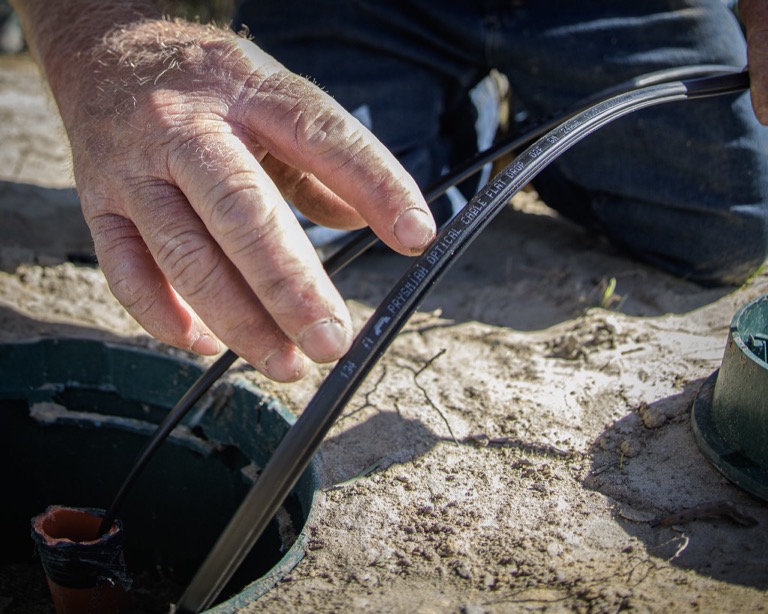
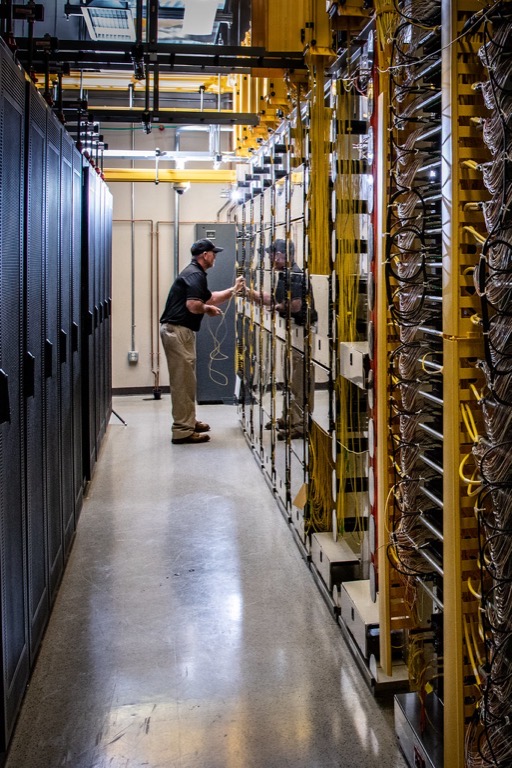
Professional fibre optic installation Brisbane businesses rely on for high-bandwidth, future-proof links. We install single-mode (OS2) and multi-mode (OM3/OM4) cable through risers, trays, conduit and underground pathways — then splice, terminate and OTDR test every core. Part of our wider fibre optic cabling service.
On this page:
Looking for professional fibre optic installation Brisbane businesses can trust? Unified Network Solutions installs single-mode and multi-mode fibre for commercial buildings, campuses and industrial sites — designed around your network, installed to AS/CA S009, and certified core-by-core with an OTDR.
The cable type decides everything downstream. Single-mode (OS2) uses a 9-micron core and laser light to carry signal over kilometres — the right choice for inter-building links, carrier hand-offs and any backbone you want to outlast the next three equipment refreshes. Multi-mode (OM3/OM4) uses a larger 50-micron core and is the cost-effective option for shorter, high-bandwidth runs inside a building, like switch-to-switch links between comms rooms. We confirm the right type at the site survey.
Installation quality is what separates a link that performs for decades from one that drops intermittently from day one. Every run we install respects minimum bend radius and tensile limits, is segregated correctly, and is hauled with the right tooling — not dragged in and hoped for. It's the same discipline behind our data cabling and structured cabling work.
As an ACMA-registered Open Cabler (License #42489), every fibre installation we deliver is compliant, fusion spliced, terminated into a FOBOT, and handed over with OTDR test results and as-built documentation.
What We Do
Every fibre optic installation starts with one question: what glass goes in the ground, the riser or the tray? Single-mode (OS2) uses a 9-micron core driven by laser optics. Its loss per kilometre is so low that for practical purposes distance stops being a constraint — the same pair of cores that carries 1 gigabit today will carry 10, 40 or 100 gigabit tomorrow with nothing but new optics at each end. That's why OS2 is our default recommendation for backbones, inter-building links and any fibre optic installation where the cable is hard to get to and expensive to replace.
Multi-mode (OM3/OM4) uses a larger 50-micron core with cheaper LED or VCSEL optics. Over short distances — inside a data centre, between racks, or a short MDF-to-IDF hop — it delivers the same real-world performance for a lower per-port electronics cost. The trap is using it beyond its distance ratings: a multi-mode link that was fine at 1 gigabit can be out of spec the day you upgrade the switches to 10 gigabit.
We price both options where the choice is genuinely open, and we'll tell you plainly when it isn't. The wrong glass is the one mistake in a fibre optic installation that no amount of good splicing can fix later.
The pathway is where fibre optic installations succeed or quietly fail. Optical fibre is glass — it tolerates far less pulling tension and far tighter bend limits than the Cat6 running beside it. Exceed either during the pull and you create micro-fractures that pass a quick continuity check, then show up as intermittent errors under load, months after everyone has been paid.
Inside buildings, we run fibre through risers and cable trays with proper bend-radius control at every change of direction, using conduit or split duct where the pathway is shared with power or mechanical services. Between buildings, fibre goes underground through conduit and pits — and if there's no existing pathway, we handle the trenching, boring and conduit installation as part of the same job, to Telstra/NBN pit-and-pipe standards.
Loose-tube outdoor cable, gel-filled where water is a risk, transitions to indoor-rated cable at the building entry — a detail that matters because outdoor cable jackets aren't fire-rated for indoor runs, and building certifiers notice. Every pathway decision is recorded in your as-built documentation, so the next contractor to touch the site knows exactly what's in the ground and where.
Every fibre optic installation is quoted fixed, but the number is built from the same handful of drivers, so here's the honest breakdown. Distance and pathway set the base: fibre through an existing riser or tray is quick; fibre that needs new conduit, core-drilling or underground boring carries the civil works with it. Core count moves the price less than people expect — the labour to install a 12-core cable is nearly identical to a 4-core, which is exactly why we push for headroom.
Termination count is the per-unit cost that scales: every core you want lit is a splice, a pigtail and an OTDR test at each end. Cores can be left terminated-dark or even unterminated for later, and for many fibre optic installations that's the smart budget move — pay for the glass now, light it when you need it.
Site conditions do the rest: working height, after-hours requirements, induction overheads on commercial sites, and whether existing pits and pathways are usable or full. As a rough Brisbane guide, a straightforward building-to-building link with a handful of terminated cores sits in the low thousands; multi-building campus installations are quoted per stage. Send photos and a site plan and you'll get a fixed number, not a range that doubles on the day.
Compliance is included, never an extra: every fibre optic installation is performed under ACMA cabling provider rules to AS/CA S009 by a registered Open Cabler (#42489), with cabling advice documentation supplied at completion where required.
We walk the pathway, confirm distances and bend constraints, and pick the right fibre — OS2 for distance and future headroom, OM3/OM4 where short multi-mode runs make better economic sense.
The fibre goes in through risers, trays, conduit or underground pathways with tension and bend radius controlled the whole way — the step where cheap fibre installs quietly fail.
Each core is fusion spliced to factory pigtails and dressed into a FOBOT or fibre tray, giving you connector-grade loss figures that mechanical terminations cannot match.
Every core is shot with the OTDR and measured against the link loss budget. You get the traces, a termination schedule and labelled cores at both ends.
Owners and managers who need a fibre link that simply works — between floors, between buildings, or from the street into the comms room — with documentation their next IT provider can pick up cold.
White-label fibre optic installation for IT providers who design the network and need the physical layer done right. Your client, your brand — our splicer, our OTDR, complete discretion.
Fitout and construction teams who can run the pathways but need a licensed fibre installer for the splicing, termination and certification stage. We slot into your programme and hand over test results, not promises.
1. The right glass. Single-mode vs multi-mode is a forever decision — get it wrong and you re-cable in five years. We design for the distances and bandwidth you'll actually need.
2. Install discipline. Fibre that is bent, kinked or over-tensioned during the pull works on day one and fails at 3am later. Bend radius and tension stay controlled from drum to tray.
3. Proof. An OTDR trace per core against a calculated loss budget is the difference between an installed link and a certified one. You get the traces, not our word.
ACMA Open Cabler #42489 covers all customer fibre cabling — installation, splicing and termination to AS/CA S009, fully insured.
Our own fusion splicer and OTDR on every job — no subcontracted testing, no waiting on a second crew to certify the link.
We come from IT. The link is designed around your switching architecture and growth plans — not just the shortest path between two walls.
Fibre is priced per project, not per point. A typical comms-room-to-comms-room link — supplied, installed, spliced, terminated, OTDR tested and documented — starts from around $2,900 + GST. Underground inter-building links typically start from $6,500 + GST. Every job is fixed-price quoted after a site inspection. Call Chris on 0412 853 618.
Single-mode (OS2) for distance, inter-building links and future headroom; multi-mode (OM3/OM4) for cost-effective high-bandwidth runs inside a building. We recommend the right type at the survey based on distance, the equipment at each end, and your growth plans.
Yes — inter-building runs are one of our most common installations, via existing conduit, new trenched conduit or aerial spans. See our fibre backbone cabling page for campus and riser work.
Always. Every core is OTDR tested and/or verified with a light source and power meter against the link loss budget, and you receive the results. See OTDR testing & certification.
Yes. Fibre that connects to the telecommunications network is customer cabling under ACMA rules and must be installed by a registered cabler. We hold ACMA Open Cabler Registration #42489, installed to AS/CA S009.
Yes — we coordinate with builders and electricians to install during the build, then return for splicing, termination and testing. See our office fitout work.
Most single-link fibre optic installations — one building to another, or between two comms rooms — are completed in one to two days on site, including splicing and OTDR certification. What stretches the timeline is civil work (trenching or boring for new underground pathways) and site access arrangements on managed commercial buildings. We give you a working-days estimate with the fixed quote, and because splicing and testing happen the same visit as the cable install, there's no second crew to wait for.
Yes — and it's one of fibre's quiet advantages. Optical fibre carries light, not electricity, so it's immune to the electromagnetic interference that forces separation rules on copper data cabling. It can share trenches, trays and risers with power circuits without induced noise. The practical limits are physical, not electrical: bend radius, crush protection and keeping it identifiable among other services — all of which proper conduit, marking and documentation take care of.
Almost always. The fibre itself is passive glass — what talks over it is the transceiver modules in your switches, which are chosen to match the fibre type and distance. As part of the link design we confirm what your existing switches can take (SFP, SFP+, QSFP), specify the right optics for the glass and distance, and can supply and fit the transceivers at both ends so the link comes up lit, not just terminated.
We install fibre optic cabling across Brisbane CBD and metro, Logan, Ipswich, Redlands, Moreton Bay, the Gold Coast, the Sunshine Coast and Toowoomba — from single links between comms rooms to multi-building campus installations. Every fibre optic installation is spliced, OTDR tested and documented to the same standard.
Fixed-price fibre optic installation with OTDR proof at handover. Call Chris or send the form — straight answers within one business day.
Call 0412 853 618 Get a Quote Online Unified Network Solutions