Professional fusion splicing for Brisbane businesses, electricians and MSPs — cores permanently jointed at typically under 0.1 dB, pigtails spliced into FOBOTs and fibre trays, enclosures rebuilt, and every splice verified by OTDR. Fibre termination done the permanent way.
Prefer to talk? Call Chris — 0412 853 618

Cores to terminate, a cable to joint, or an electrician's fibre run that needs splicing and certification to finish the job — send the core counts and Chris will price it fixed. Prefer to talk? Call 0412 853 618. No pushy sales, just solid work.
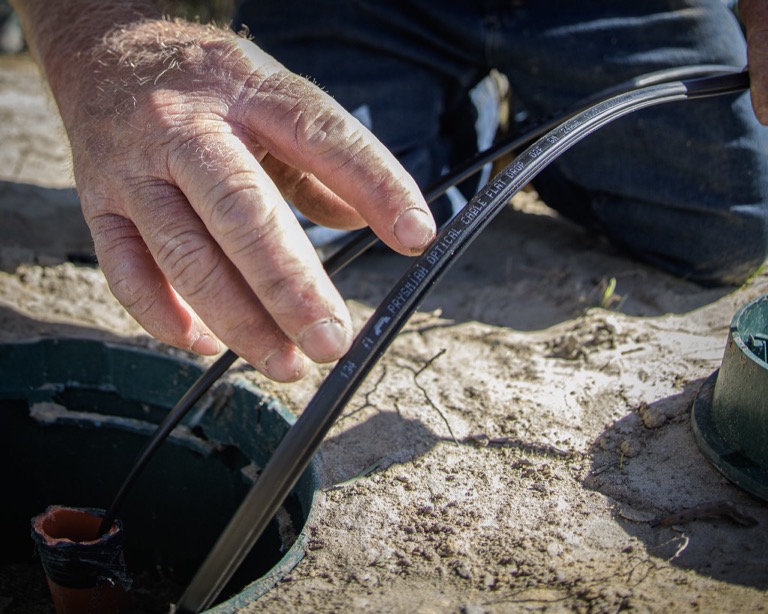
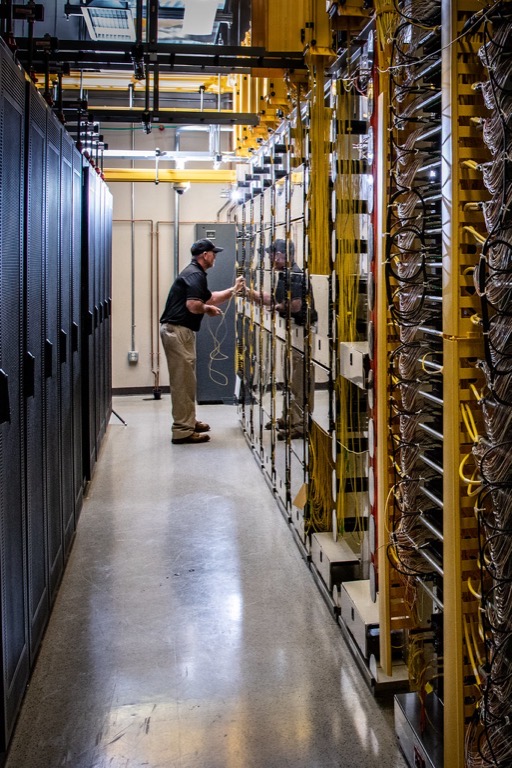
Professional fusion splicing Brisbane businesses, electricians and MSPs rely on for permanent, low-loss fibre joints — typically under 0.1 dB. We splice pigtails into FOBOTs, repair damaged cable, and certify every splice with an OTDR. A core part of our fibre optic cabling service.
On this page:
Need fusion splicing Brisbane you can rely on? Fusion splicing is the process of permanently joining two optical fibres by precisely aligning the glass cores and welding them with an electric arc. Done properly, the result is a joint with extremely low signal loss — typically under 0.1 dB — and no reflection. It is the professional standard for terminating fibre and for repairing damaged cable.

The alternative — mechanical splices and poorly seated connectors — is the single most common cause of the fibre faults we get called to diagnose. A rushed splice or a dirty connector can add a dB of loss in one spot and drop a link that should have decades of headroom. Precision fusion splicing, with a calibrated splicer and clean-room connector hygiene, avoids both.
We splice on site: terminating new installations via pigtails into a FOBOT or LIU, joining cable runs, and repairing cuts located with an OTDR. Every splice is protected with a heat-shrink sleeve, organised in the tray, and labelled to a splice plan you receive at handover.
As an ACMA Open Cabler (#42489) with 15+ years across data and fibre networks, our splicing is backed by OTDR certification — so you get measured proof of every joint, not a verbal assurance.
What We Do
A splice never exists alone — it lives in hardware, and the hardware is half the job. Pigtail termination is the standard way we terminate installed fibre: a factory-made connector with a metre of fibre attached is fusion spliced to each installed core. You get factory polish quality on every connector — reliably better than any field-polished termination — with the splice itself typically losing under 0.1 dB.
Those spliced pigtails dress into a FOBOT or fibre tray in the comms cabinet: splice sleeves seated in their holders, fibre coiled at safe bend radius, connectors presented at the front ready for patching. Outside the cabinet, splice enclosures do the same job in harsher places — underground pits, risers, wall-mounted joints — sealed against water, because moisture is the slow killer of buried splices.
When we quote fusion splicing, the dressing and hardware are part of the price and part of the standard. A perfect splice thrown loose into a pit is a fault with a delivery date; a properly dressed and sealed one outlives the building's paint.
A good share of our fusion splicing work in Brisbane is finishing fibre that another trade has installed — and the handoff is smoother than you might expect. You run the cable along your pathways during your works; we arrive with the splicer and OTDR when the ends are ready. Typical sequence: you leave agreed service loops at each end, send us photos of the cabinet space and core counts, and we confirm a splice plan and fixed per-core price before mobilising.
On site, we strip, cleave and splice each core to pigtails, build the FOBOTs at both ends, then OTDR every core and hand you results the project consultant will accept — usually same-day. Your contract stays whole: you delivered the complete cabling package, we did the specialist stage. For electrical contractors who hit fibre a few times a year, that beats owning a $15,000 splicer that spends its life in a cupboard.
We work the same way for lead-in and NBN-adjacent work, private links alongside NBN infrastructure, and fitout programmes where the fibre stage has to land in a specific week. Book the splicing when the pathways are booked and the programme never waits on us.
Fusion splicing is one of the easiest services in our book to price honestly, because the unit of work is so clean: a per-core rate for pigtail terminations and joints, a job minimum that covers mobilisation and machine setup, and hardware — FOBOTs, trays, enclosures, pigtails — at quoted supply prices. Tell us the core counts and connector types and the number you get is the number you pay.
The per-core rate steps down as volume rises. Terminating a 4-core lead-in and terminating a 144-core campus backbone are different days entirely, and the pricing reflects it — which is why electricians and data contractors who bring us their fibre termination work by the project rather than the visit get the sharpest rates. After-hours splicing for live-site cutovers carries a modest loading, agreed up front.
What the price always includes: preparation and cleaving to standard, splice-loss estimates checked at the machine, sleeves seated and dressed into their hardware properly, and OTDR verification of every core we splice — with the traces in your handover pack. A fusion splicing quote without testing included isn't cheaper; it's just unfinished. If you're comparing quotes, ask the other bloke whether his number includes the proof.
One more honesty note: minimum charges exist because calibrated splicing equipment and a controlled work environment travel to your site whether the job is four cores or forty. If you only have a couple of cores to joint, batching the work with another visit — or timing it alongside a testing or cabling job — is the cheapest way to buy fusion splicing, and we'll suggest it when the maths works in your favour.
Cable opened, tubes and cores identified against the splice plan, coatings stripped and each core cleaved to a mirror finish — splice quality is decided before the arc ever fires.
The core-aligned splicer fuses each joint and estimates its loss on the spot. Anything above target is cut back and re-spliced immediately — not left for the OTDR to find later.
Splice sleeves seated into trays, bend radius maintained, enclosures and FOBOTs closed up properly — because most "splice failures" are actually dressing failures.
The finished work is shot end-to-end. Every splice event in the trace is measured against spec, and the results go in your handover pack with the splice plan.
You've run the fibre — we splice, terminate and certify it so the job closes out. Per-core pricing, splice plans supplied, results the consultant will accept. The most common call we get.
White-label splicing and fibre termination for MSP projects — new FOBOTs in client racks, campus links jointed, documentation in your name if you want it that way.
Direct splicing work — extending fibre to a new area, rebuilding a damaged enclosure, or terminating cores that were left dark and unfinished by a previous contractor.
1. The cleave. A fusion splice is only as good as the cleave that preceded it. Sub-0.1 dB comes from discipline at the prep bench, not luck at the arc.
2. Fusion, not mechanical. Mechanical splices and field-polished connectors are the most common cause of marginal fibre links we're called to fix. Fusion with factory pigtails, every time.
3. The trace. Splice-loss estimates from the machine are a guide; the OTDR shot is the proof. Every splice we bill for is visible and measured in your trace.
4. The dressing. Most "failed splices" we're called to redo were fine splices ruined by bad dressing — pinched sleeves, tight coils, unsealed enclosures. The hardware work around the splice gets the same discipline as the arc itself.
Core-aligned fusion splicer and OTDR on the van — no hire equipment, no second visit to test, no waiting on another crew.
FOBOTs, LIUs, trays and enclosures built and rebuilt weekly — fibre termination is core work for us, not an occasional extra.
We slot into electrical and construction programmes cleanly — splice plans agreed up front, site inductions handled, results delivered same-day.
A well-executed fusion splice typically measures under 0.1 dB, often around 0.02–0.05 dB. We verify every splice with an OTDR and certify it against the link loss budget.
It depends on the number of splices, cable type and access. Splicing is usually part of a fixed-price fibre job — a full comms-room link including splicing starts from around $2,900 + GST. Call Chris on 0412 853 618 for a quote on your specific job.
Yes — we splice on site across Brisbane and SEQ, including subcontract splicing and OTDR testing for electricians, builders and MSPs who need the specialist fibre work done and certified.
Fusion splicing welds the fibres for a permanent, very low-loss joint. Mechanical splicing aligns them in a connector with index-matching gel — faster but higher loss and less reliable. We fusion splice as standard.
Yes. We locate the damage with an OTDR, then re-splice or re-terminate. See fibre optic repairs — emergency fault location and repair starts from $1,200 + GST.
Yes — every splice is OTDR tested and the results are in your handover pack. See OTDR testing & certification.
As a working guide: preparation, splicing, dressing and verification of a 12-core cable at both ends is comfortably a day's work; a single 24- or 48-core FOBOT build at one location is similar. High-count campus jobs are quoted with a realistic per-day schedule so your programme can plan around us. Speed is never the metric we brag about, though — the OTDR trace at the end of the day is.
A pigtail splice fuses your installed fibre to a short factory-made lead with the connector already polished on — so every connector on the job has factory-grade geometry and reflectance. Field-terminated (mechanically polished or cleave-and-crimp) connectors are assembled by hand on site, and they're the single most common cause of the marginal links we get called to fix. We terminate by pigtail as standard; it costs slightly more per core and saves the price difference many times over in reliability.
Our day-to-day work is single-fibre (loose tube) splicing, which covers the overwhelming majority of commercial premises cabling in Brisbane. Ribbon fibre — mass-fusion spliced twelve cores at a time — mostly lives in carrier and data-centre trunk work; if your project involves it, tell us the cable spec when you enquire and we'll confirm capability or point you at the right specialist rather than learn on your job.
Fusion splicing and fibre termination across Brisbane CBD and metro, Logan, Ipswich, Redlands, Moreton Bay, the Gold Coast, the Sunshine Coast and Toowoomba — FOBOT terminations, enclosure rebuilds, cable joints and pigtail splicing, all OTDR verified. We regularly splice for electricians and builders on fitout programmes from the CBD to Springfield and North Lakes — same-day results, per-core pricing, no drama.
Fixed per-core pricing, sub-0.1 dB targets, and OTDR proof at handover. Call Chris or send the form — straight answers within one business day.
Call 0412 853 618 Get a Quote Online Unified Network Solutions